



【Zhongke Zhonghuan】Academician Sun Jinhua of the European Academy of Sciences: Safety guarantee technology for electrochemical energy storage power plants
Release Date:2020-11-26 Source: View count:466
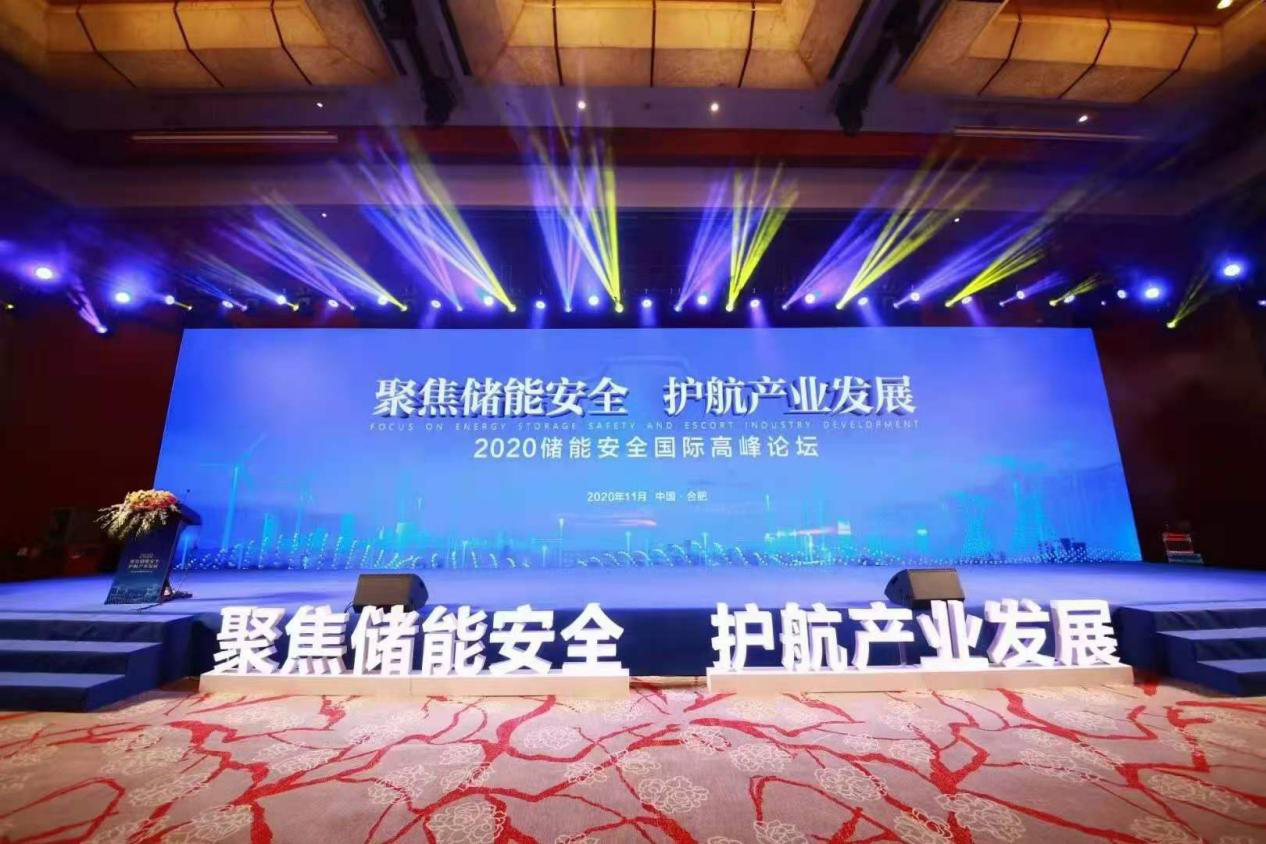
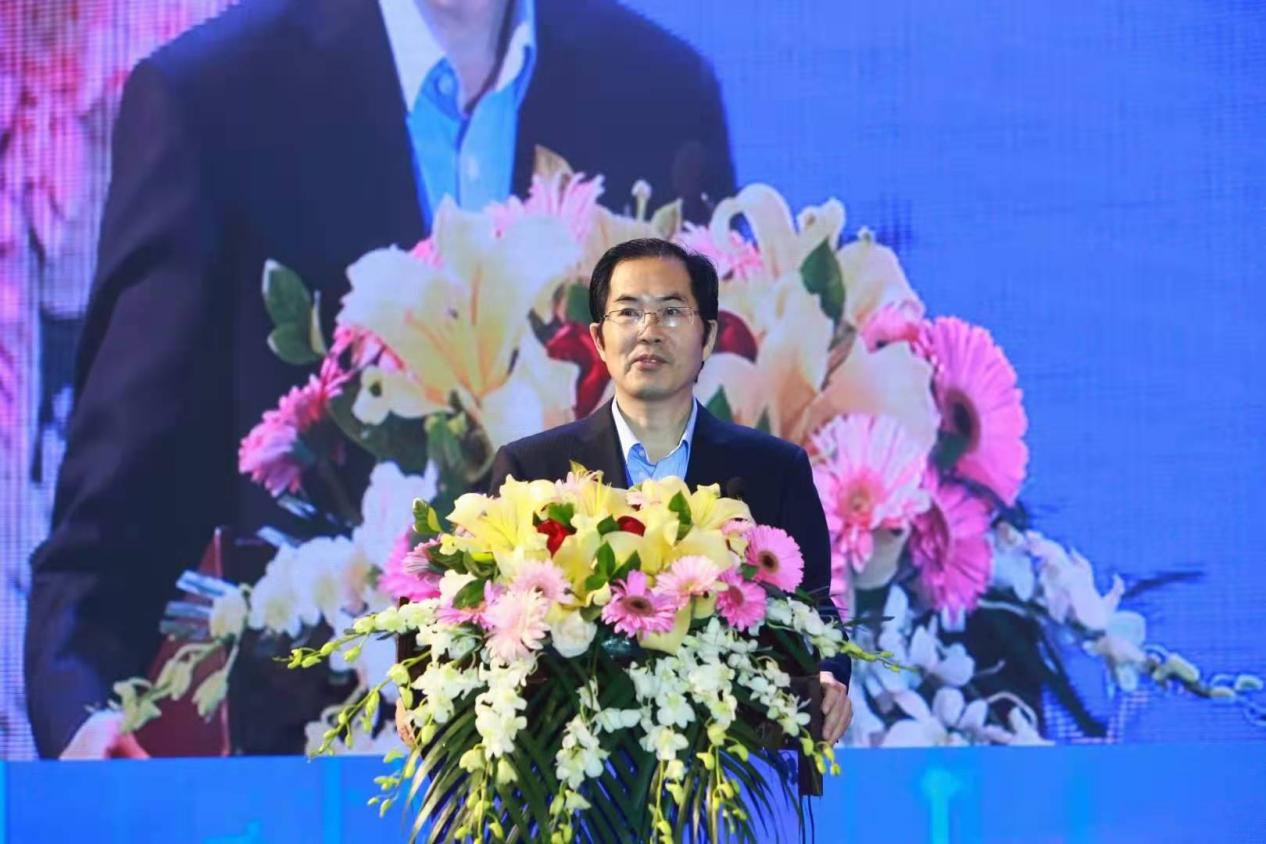
"2020 Energy Storage Safety International Summit Forum" is under the guidance of Hefei Science and Technology Bureau and Hefei High tech Industrial Development Zone Management Committee, hosted by the State Key Laboratory of Fire Science of University of Science and Technology of China and Anhui Zhongke Zhonghuan Defence Equipment Technology Co., Ltd., co organized by Zhongguancun Energy Storage Industry Technology Alliance, State Grid Anhui Electric Power Co., Ltd. and Hangzhou Gaote Electronic Equipment Co., Ltd. At the meeting, Sun Jinhua, an academician of the European Academy of Sciences and a professor of the University of Science and Technology of China, delivered a keynote speech entitled "Safety Assurance Technology for Electrochemical Energy Storage Power Plants", respectively from the development and fire situation of electrochemical energy storage power plants, the current situation of national energy storage development, the ignition mechanism and fire characteristics of lithium-ion batteries, and the progress of fire safety technology for electrochemical energy storage power plants. and technology outlook.
Development and Fire Situation of Electrochemical Energy Storage Power Plants
Energy storage is an important part of each country's strategy and an important link of the energy Internet. Therefore, all countries in the world attach great importance to energy storage. According to statistics, by the end of 2019, the cumulative installed capacity of energy storage projects that have been invested in the world has reached 184.6GW, especially electrochemical energy storage.
In electrochemical energy storage, lithium batteries have the largest installed capacity, accounting for 81% of electrochemical energy storage. Internationally, the United States has issued many laws and regulations since 2007 to promote the development of electrochemical energy storage. The EU has also invested heavily, such as in June 2018, investing 15 billion euros in the EU's Horizon Plan to support renewable energy storage and competitive industrial chains. Our neighboring countries are at the forefront of energy storage, especially electrochemical energy storage, and South Korean energy storage companies have taken a pivotal position in the global electrochemical energy storage market.
The Current Status of National Energy Storage Development
Our country has developed rapidly in recent years and will continue to grow exponentially in the future. However, with the rapid development of global electrochemical energy storage, it has also brought some safety hazards. From May 2018 to May 2019, in just about a year, South Korea had more than a thousand electrochemical energy storage power plants, and a total of 23 fires occurred, with an annual fire probability of 1.5% for each plant, which is an unacceptable probability.
In recent years, energy storage power stations in our country have also been flourishing, and a series of energy storage power station fires have occurred. For example, in 2017, a large fire broke out in the energy storage system of a thermal power plant in Shanxi. In 2018, there was a fire at the Yangzhong Energy Storage Power Station in Zhenjiang with a total investment of 190 million yuan. Various types of fires have occurred successively on the power generation side, power grid side, and user side. It can be said that the fires in energy storage power stations have sounded the alarm for the development of the electrochemical industry. Therefore, in 2019, State Grid Corporation of China twice stepped on the emergency brake for electrochemical energy storage, mainly because safety issues have not been thoroughly resolved. How to solve bottleneck problems and ensure the safe and healthy development of the electrochemical energy storage industry is a problem that academia, industry, and colleagues need to face and solve.
Fire mechanism and characteristics of lithium-ion batteries
In order to understand the mechanism and rules of battery fires, the decomposition reaction characteristics of each material in the battery system, the chemical reaction characteristics between materials, and the heat generation mechanism were first studied. This map shows the reaction between the positive electrode material and the electrolyte, with exothermic reactions occurring at around 140 degrees Celsius and very intense at around 250 degrees Celsius. This is the reaction between the negative electrode material and the electrolyte, and an exothermic reaction occurs at a peak temperature of around 90 degrees. Reaching temperatures above 150 degrees will release a large amount of heat.
The entire battery system, including positive electrode materials, negative electrode materials, electrolyte, etc., the comprehensive reaction of these substances is a very complex process. Based on the comprehensive reaction curve, combined with mathematical and chemical algorithms, individual substance reactions, and measurement of reaction intermediates, complex reactions can be decomposed into multiple partial reactions, and the starting reaction heat and heat release of each partial reaction can be obtained. This can help identify which reaction is the one that triggers battery ignition and which reaction is the main control reaction that controls battery ignition.
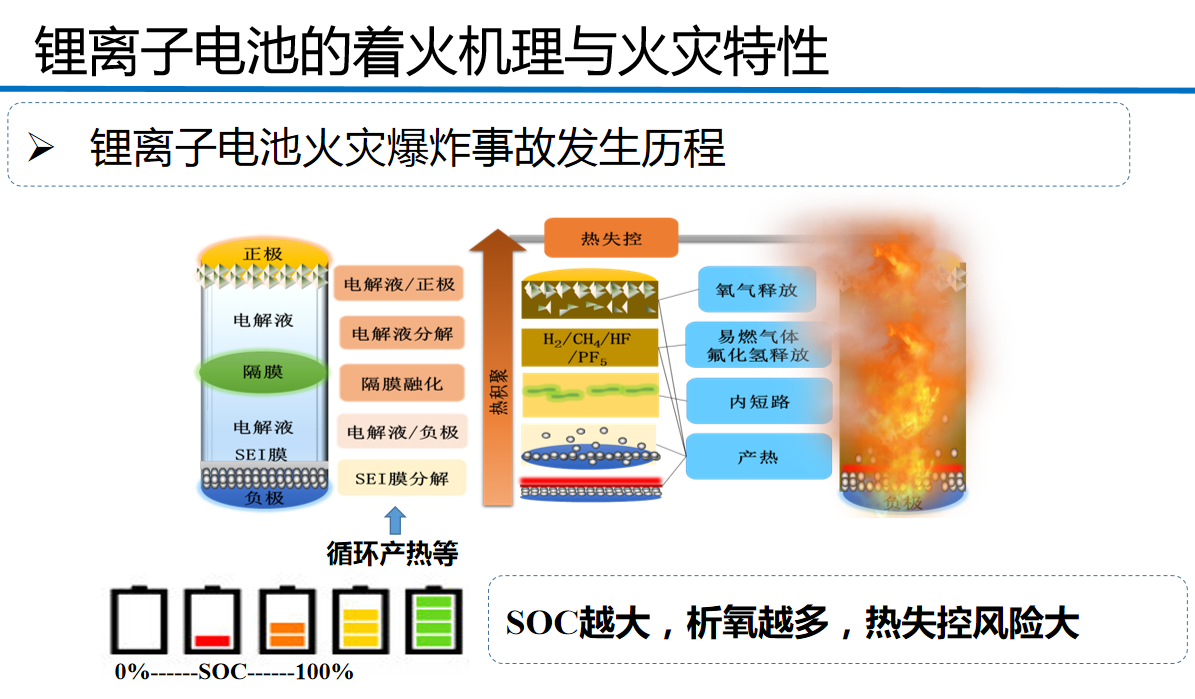
Through chemical research, it has been found that a chemical reaction needs to occur at around 80-90 degrees Celsius. The normal operating temperature for battery systems is room temperature. During battery use, both individual batteries and battery systems will release heat during charging and discharging. If the heat is not dissipated in time, it will raise the temperature of the battery system to the critical temperature for chemical reactions, thereby inducing chemical reactions. We have plotted the process of lithium-ion battery fires and even explosions, as well as their relationship with temperature. Firstly, the cycle generates heat, which is physical heat that triggers chemical reactions.
To study the fire characteristics of battery fires, we have designed a large-scale lithium-ion battery fire hazard testing platform based on the ISO9705 standard. On this platform, conducting experiments with 50-310AH, the battery will first expand before losing control, and after reaching a certain threshold, the first jet fire will occur. If the battery is a high SOC, it will experience multiple jet fires until the materials inside are completely burned out. At the same time, we used our own platform to measure the heat generation of different types of batteries and obtained data on the heat release rate and amount.
At the same time, foreign scholars have used gas chromatography and ACR to obtain the content of gases produced during its injection process, which can cause fires in the gas phase when released into space. But when the battery loses thermal control, not only will these gases be generated, but different methods of measurement will also yield different gases.
In addition to studying the characteristics of individual batteries, we also investigated the spread of fire in battery packs. For example, in the experiment conducted on four battery modules, the heat release rate was also measured. The second battery was heated while the first, third, and fourth batteries were not heated. After the second battery caught fire, the fire would heat the surrounding batteries. After a period of time, the third battery caught fire, and about twenty minutes later, the first and fourth batteries exploded. Of course, not all batteries explode when this explosion occurs. Lithium iron phosphate batteries are relatively safer.
Detailed measurements were conducted on the temperature conditions of nine assembled batteries, and systematic experimental research was also conducted on square batteries. A large number of temperatures were measured on the front surface, back surface, back surface, etc. With these temperatures, combined with a heat transfer model, a propagation model for internal thermal runaway of the battery module was established, and their propagation mechanism was revealed.
Fire safety technical issues in electrochemical energy storage power plants
There are many fires in electric energy storage nowadays, and the reasons are as follows:
1. Lack of fire protection design specifications applicable to electrochemical energy storage power plants. At present, this standard was released in 2014, and it is mentioned in the fire protection regulations that it should comply with the national standard 50016 Building Design Fire Protection Code. Electrochemical energy storage and buildings are fundamentally different, and the factors that trigger fires are different, and the forms of fires are also different. Some places require the configuration of fire extinguishers according to national standards, without fully developing corresponding specifications based on the characteristics, hazards, and risks of electrochemical energy storage power plants. Later, the "Technical Conditions for Fire Safety of Small Energy Storage Stations" were introduced, which also included some fire safety requirements. However, there is still a huge gap from the actual fire safety requirements of electrochemical energy storage stations.
2. Lack of abnormal diagnosis of batteries and prediction and warning technology for battery thermal runaway. The BMS system of an electrochemical energy storage power station controls the temperature of the entire battery system, maximizing the lifespan of the battery and improving its efficiency. However, if certain batteries fail, it can also trigger a fire, and there is currently a lack of predictive and warning technology for such abnormal accidents. Under mandatory regulations, some fire extinguishing agents now use water-based systems, while others use heptafluoropropane. Water based fire extinguishing methods have better fire extinguishing effects and can be used for extinguishing individual batteries without any problem, as individual batteries must undergo hydrophilic testing before leaving the factory; However, there are problems when used in battery modules. After the batteries are connected in series or parallel, the output voltage ranges from several hundred volts to thousands of volts. If water-based fire extinguishing agents are used, it may cause external short circuits and trigger fires.
By comparison, heptafluoropropane has a better fire extinguishing effect, but since battery fires are fundamentally caused by chemical reactions inside the battery, if only the gas-phase flame is extinguished and the chemical reaction rate inside the battery is not reduced, the fire is difficult to extinguish. So it does not have the function of preventing battery reignition, and it is also a spray. Once the battery reignites for the second or third time, it cannot be flame retardant.
Progress in Fire Safety Technology for Electrochemical Energy Storage Power Plants
1. The design specifications for fire safety in electrochemical energy storage power plants are currently being revised. The current specifications are not based on the fire performance of battery cells and modules, as well as the flame propagation performance between battery modules, and the testing of predictive warning technology. This has guiding significance for the safety of electrochemical energy storage power plants. The technology of efficient thermal management and accurate and reliable thermal runaway warning is also developing, mainly based on the electrochemical performance, the characteristics of cyclic heat generation, as well as the heat transfer of batteries and the heat transfer characteristics between batteries, to optimize BMS. On the other hand, based on some experiments on battery thermal runaway, key parameters during the thermal runaway process can be extracted. These parameters are often the result of multi parameter fusion, which can identify which ones are used for prediction and warning, and make intelligent judgments on them, thus developing efficient thermal management and reliable warning technologies.
2. Efficient thermal management and accurate and reliable thermal runaway prediction and warning technology.
Through temperature, CO, smoke, flames, etc VOC、 Resistance voltage is used for graded warning based on judgment. The first level requires fault warning, the second level requires intervention, and the third level requires fire extinguishing. These characteristic parameters are obtained by overcharging, external short circuiting, internal short circuiting, environmental heating, etc. based on different types of batteries and batteries with different SOC states, to determine the parameters that cause thermal runaway and appearance. Combined with the structure and heat transfer model of the battery, the warning parameter threshold for multi parameter fusion of the battery is obtained.
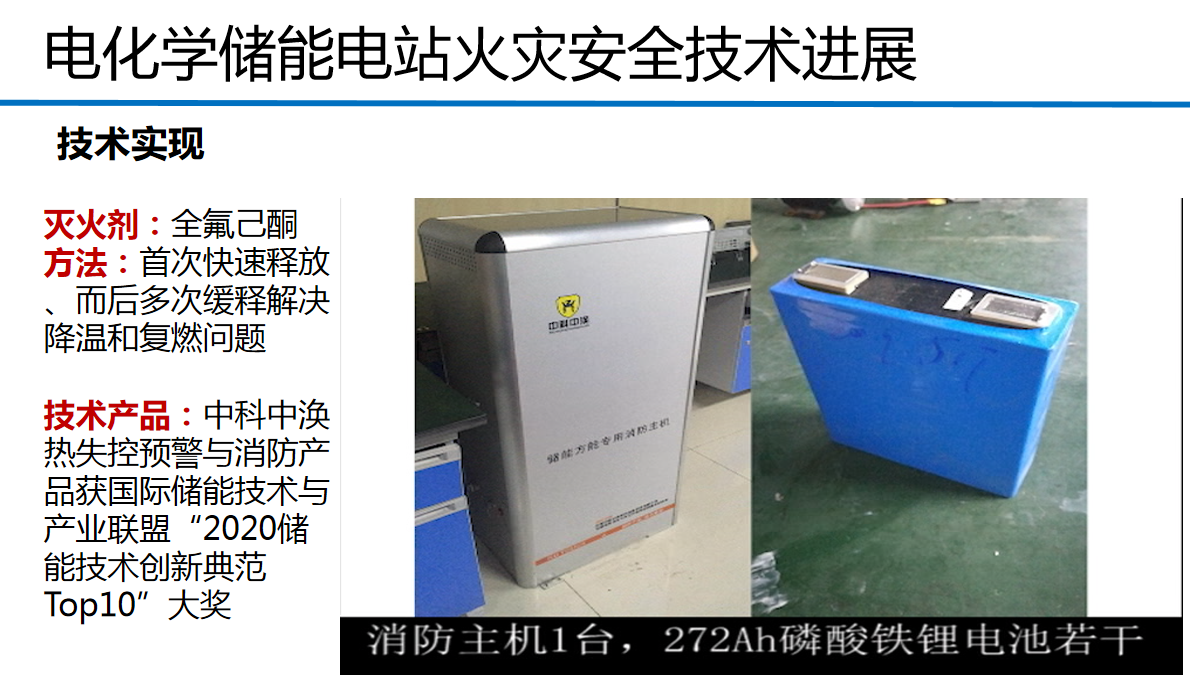
3. Rapid and precise fire extinguishing and anti re ignition technology. The team conducted systematic experiments on different fire extinguishing agents, such as water, heptafluoropropane, carbon dioxide, aerosols, etc. From these fire extinguishing experiments, it can be seen that heptafluoropropane has a better fire extinguishing effect, while carbon dioxide is slightly weaker. If the battery module uses water-based fire extinguishing, it is necessary to prevent short circuits and require fast extinguishing, efficient cooling, and insulation of the fire extinguisher. The fire extinguishing technology requires the prevention of reignition and the ability to extinguish fires multiple times. For this purpose, it is mainly achieved through the use of fire extinguishing agents. We recommend perfluorohexane, which is rapidly released for the first time and then released multiple times to solve the problems of cooling and reignition. This technology has been industrialized in Zhongke Zhonghuan and won the 2020 Energy Storage Technology Innovation Model TOP10 award this year.
Finally, there is the technology outlook. The current technological progress should be approached from the following two aspects.
1. Integrated technology that combines efficient thermal management, fault diagnosis, early warning, and fire extinguishing collaboration. Firstly, the electrochemical energy storage power station is inputted into the system through various sensors and basic data input interfaces. The system includes thermal management models, prediction and warning models, and disposal and fire extinguishing models. Based on the intelligent operation of these models, the data is processed and intelligently judged. If it is normal operation and maintenance, instructions are issued for normal operation and maintenance. If it is abnormal, it is disposed of. Moreover, the system must be intelligent, compact, lightweight, and economical.
2. Develop intelligent security management technology based on Internet cloud data. Not only the energy storage cabinet of a certain internal energy storage power station, but also the data of the whole country should be collected, and intelligent management should be carried out in the case of Internet and cloud data. On the basis of the intelligent security management platform, there should also be basic data, prediction models, and sensors for monitoring and monitoring. At the same time, intelligent analysis should be carried out to ensure the safety of energy storage power stations in our entire industry.
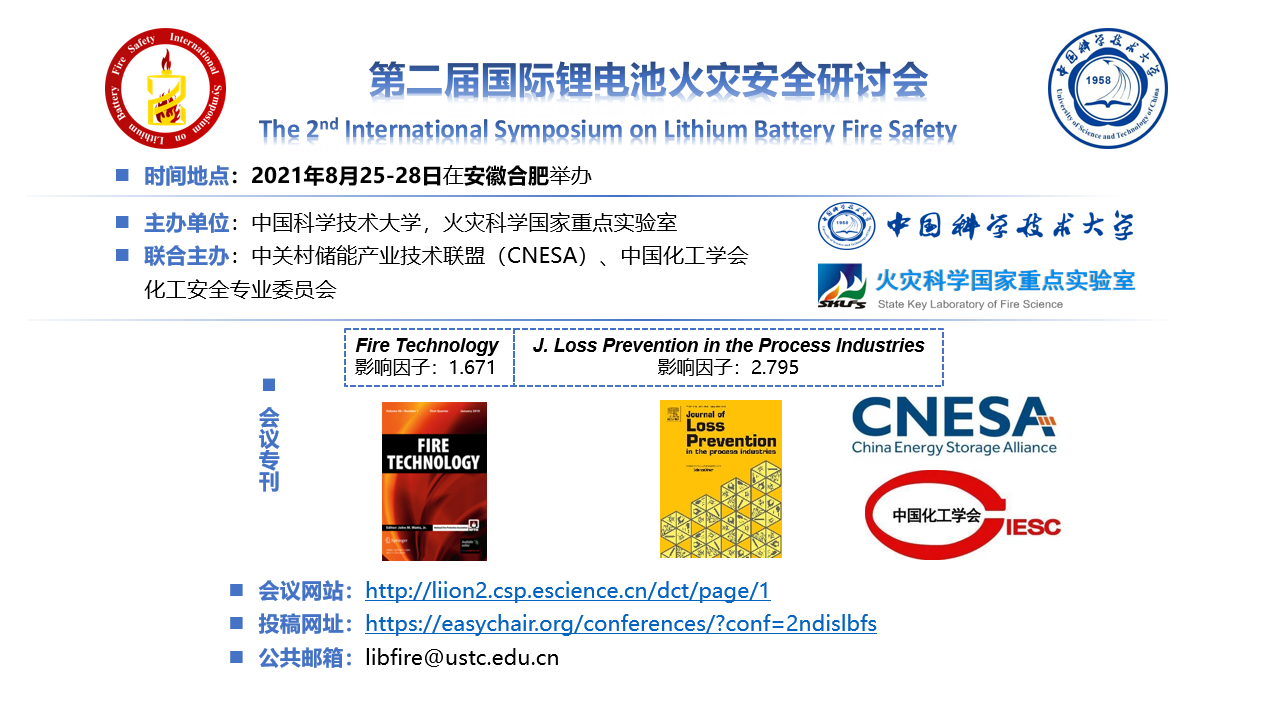
Preview: The second International Lithium ion Battery Safety Symposium will be held in Hefei from August 25th to 28th, 2021. The first one was successfully held in Hefei last year, with nearly 300 participants from more than ten countries and regions. At the same time, we will collaborate with some well-known journals in the field of fire safety to publish excellent papers.
"2020 Energy Storage Safety International Summit Forum" is under the guidance of Hefei Science and Technology Bureau and Hefei High tech Industrial Development Zone Management Committee, hosted by the State Key Laboratory of Fire Science of University of Science and Technology of China and Anhui Zhongke Zhonghuan Defence Equipment Technology Co., Ltd., co organized by Zhongguancun Energy Storage Industry Technology Alliance, State Grid Anhui Electric Power Co., Ltd. and Hangzhou Gaote Electronic Equipment Co., Ltd. At the meeting, Sun Jinhua, an academician of the European Academy of Sciences and a professor of the University of Science and Technology of China, delivered a keynote speech entitled "Safety Assurance Technology for Electrochemical Energy Storage Power Plants", respectively from the development and fire situation of electrochemical energy storage power plants, the current situation of national energy storage development, the ignition mechanism and fire characteristics of lithium-ion batteries, and the progress of fire safety technology for electrochemical energy storage power plants. and technology outlook.
Development and Fire Situation of Electrochemical Energy Storage Power Plants
Energy storage is an important part of each country's strategy and an important link of the energy Internet. Therefore, all countries in the world attach great importance to energy storage. According to statistics, by the end of 2019, the cumulative installed capacity of energy storage projects that have been invested in the world has reached 184.6GW, especially electrochemical energy storage.
In electrochemical energy storage, lithium batteries have the largest installed capacity, accounting for 81% of electrochemical energy storage. Internationally, the United States has issued many laws and regulations since 2007 to promote the development of electrochemical energy storage. The EU has also invested heavily, such as in June 2018, investing 15 billion euros in the EU's Horizon Plan to support renewable energy storage and competitive industrial chains. Our neighboring countries are at the forefront of energy storage, especially electrochemical energy storage, and South Korean energy storage companies have taken a pivotal position in the global electrochemical energy storage market.
The Current Status of National Energy Storage Development
Our country has developed rapidly in recent years and will continue to grow exponentially in the future. However, with the rapid development of global electrochemical energy storage, it has also brought some safety hazards. From May 2018 to May 2019, in just about a year, South Korea had more than a thousand electrochemical energy storage power plants, and a total of 23 fires occurred, with an annual fire probability of 1.5% for each plant, which is an unacceptable probability.
In recent years, energy storage power stations in our country have also been flourishing, and a series of energy storage power station fires have occurred. For example, in 2017, a large fire broke out in the energy storage system of a thermal power plant in Shanxi. In 2018, there was a fire at the Yangzhong Energy Storage Power Station in Zhenjiang with a total investment of 190 million yuan. Various types of fires have occurred successively on the power generation side, power grid side, and user side. It can be said that the fires in energy storage power stations have sounded the alarm for the development of the electrochemical industry. Therefore, in 2019, State Grid Corporation of China twice stepped on the emergency brake for electrochemical energy storage, mainly because safety issues have not been thoroughly resolved. How to solve bottleneck problems and ensure the safe and healthy development of the electrochemical energy storage industry is a problem that academia, industry, and colleagues need to face and solve.
Fire mechanism and characteristics of lithium-ion batteries
In order to understand the mechanism and rules of battery fires, the decomposition reaction characteristics of each material in the battery system, the chemical reaction characteristics between materials, and the heat generation mechanism were first studied. This map shows the reaction between the positive electrode material and the electrolyte, with exothermic reactions occurring at around 140 degrees Celsius and very intense at around 250 degrees Celsius. This is the reaction between the negative electrode material and the electrolyte, and an exothermic reaction occurs at a peak temperature of around 90 degrees. Reaching temperatures above 150 degrees will release a large amount of heat.
The entire battery system, including positive electrode materials, negative electrode materials, electrolyte, etc., the comprehensive reaction of these substances is a very complex process. Based on the comprehensive reaction curve, combined with mathematical and chemical algorithms, individual substance reactions, and measurement of reaction intermediates, complex reactions can be decomposed into multiple partial reactions, and the starting reaction heat and heat release of each partial reaction can be obtained. This can help identify which reaction is the one that triggers battery ignition and which reaction is the main control reaction that controls battery ignition.
Through chemical research, it has been found that a chemical reaction needs to occur at around 80-90 degrees Celsius. The normal operating temperature for battery systems is room temperature. During battery use, both individual batteries and battery systems will release heat during charging and discharging. If the heat is not dissipated in time, it will raise the temperature of the battery system to the critical temperature for chemical reactions, thereby inducing chemical reactions. We have plotted the process of lithium-ion battery fires and even explosions, as well as their relationship with temperature. Firstly, the cycle generates heat, which is physical heat that triggers chemical reactions.
To study the fire characteristics of battery fires, we have designed a large-scale lithium-ion battery fire hazard testing platform based on the ISO9705 standard. On this platform, conducting experiments with 50-310AH, the battery will first expand before losing control, and after reaching a certain threshold, the first jet fire will occur. If the battery is a high SOC, it will experience multiple jet fires until the materials inside are completely burned out. At the same time, we used our own platform to measure the heat generation of different types of batteries and obtained data on the heat release rate and amount.
At the same time, foreign scholars have used gas chromatography and ACR to obtain the content of gases produced during its injection process, which can cause fires in the gas phase when released into space. But when the battery loses thermal control, not only will these gases be generated, but different methods of measurement will also yield different gases.
In addition to studying the characteristics of individual batteries, we also investigated the spread of fire in battery packs. For example, in the experiment conducted on four battery modules, the heat release rate was also measured. The second battery was heated while the first, third, and fourth batteries were not heated. After the second battery caught fire, the fire would heat the surrounding batteries. After a period of time, the third battery caught fire, and about twenty minutes later, the first and fourth batteries exploded. Of course, not all batteries explode when this explosion occurs. Lithium iron phosphate batteries are relatively safer.
Detailed measurements were conducted on the temperature conditions of nine assembled batteries, and systematic experimental research was also conducted on square batteries. A large number of temperatures were measured on the front surface, back surface, back surface, etc. With these temperatures, combined with a heat transfer model, a propagation model for internal thermal runaway of the battery module was established, and their propagation mechanism was revealed.
Fire safety technical issues in electrochemical energy storage power plants
There are many fires in electric energy storage nowadays, and the reasons are as follows:
1. Lack of fire protection design specifications applicable to electrochemical energy storage power plants. At present, this standard was released in 2014, and it is mentioned in the fire protection regulations that it should comply with the national standard 50016 Building Design Fire Protection Code. Electrochemical energy storage and buildings are fundamentally different, and the factors that trigger fires are different, and the forms of fires are also different. Some places require the configuration of fire extinguishers according to national standards, without fully developing corresponding specifications based on the characteristics, hazards, and risks of electrochemical energy storage power plants. Later, the "Technical Conditions for Fire Safety of Small Energy Storage Stations" were introduced, which also included some fire safety requirements. However, there is still a huge gap from the actual fire safety requirements of electrochemical energy storage stations.
2. Lack of abnormal diagnosis of batteries and prediction and warning technology for battery thermal runaway. The BMS system of an electrochemical energy storage power station controls the temperature of the entire battery system, maximizing the lifespan of the battery and improving its efficiency. However, if certain batteries fail, it can also trigger a fire, and there is currently a lack of predictive and warning technology for such abnormal accidents. Under mandatory regulations, some fire extinguishing agents now use water-based systems, while others use heptafluoropropane. Water based fire extinguishing methods have better fire extinguishing effects and can be used for extinguishing individual batteries without any problem, as individual batteries must undergo hydrophilic testing before leaving the factory; However, there are problems when used in battery modules. After the batteries are connected in series or parallel, the output voltage ranges from several hundred volts to thousands of volts. If water-based fire extinguishing agents are used, it may cause external short circuits and trigger fires.
By comparison, heptafluoropropane has a better fire extinguishing effect, but since battery fires are fundamentally caused by chemical reactions inside the battery, if only the gas-phase flame is extinguished and the chemical reaction rate inside the battery is not reduced, the fire is difficult to extinguish. So it does not have the function of preventing battery reignition, and it is also a spray. Once the battery reignites for the second or third time, it cannot be flame retardant.
Progress in Fire Safety Technology for Electrochemical Energy Storage Power Plants
1. The design specifications for fire safety in electrochemical energy storage power plants are currently being revised. The current specifications are not based on the fire performance of battery cells and modules, as well as the flame propagation performance between battery modules, and the testing of predictive warning technology. This has guiding significance for the safety of electrochemical energy storage power plants. The technology of efficient thermal management and accurate and reliable thermal runaway warning is also developing, mainly based on the electrochemical performance, the characteristics of cyclic heat generation, as well as the heat transfer of batteries and the heat transfer characteristics between batteries, to optimize BMS. On the other hand, based on some experiments on battery thermal runaway, key parameters during the thermal runaway process can be extracted. These parameters are often the result of multi parameter fusion, which can identify which ones are used for prediction and warning, and make intelligent judgments on them, thus developing efficient thermal management and reliable warning technologies.
2. Efficient thermal management and accurate and reliable thermal runaway prediction and warning technology.
Through temperature, CO, smoke, flames, etc VOC、 Resistance voltage is used for graded warning based on judgment. The first level requires fault warning, the second level requires intervention, and the third level requires fire extinguishing. These characteristic parameters are obtained by overcharging, external short circuiting, internal short circuiting, environmental heating, etc. based on different types of batteries and batteries with different SOC states, to determine the parameters that cause thermal runaway and appearance. Combined with the structure and heat transfer model of the battery, the warning parameter threshold for multi parameter fusion of the battery is obtained.
3. Rapid and precise fire extinguishing and anti re ignition technology. The team conducted systematic experiments on different fire extinguishing agents, such as water, heptafluoropropane, carbon dioxide, aerosols, etc. From these fire extinguishing experiments, it can be seen that heptafluoropropane has a better fire extinguishing effect, while carbon dioxide is slightly weaker. If the battery module uses water-based fire extinguishing, it is necessary to prevent short circuits and require fast extinguishing, efficient cooling, and insulation of the fire extinguisher. The fire extinguishing technology requires the prevention of reignition and the ability to extinguish fires multiple times. For this purpose, it is mainly achieved through the use of fire extinguishing agents. We recommend perfluorohexane, which is rapidly released for the first time and then released multiple times to solve the problems of cooling and reignition. This technology has been industrialized in Zhongke Zhonghuan and won the 2020 Energy Storage Technology Innovation Model TOP10 award this year.
Finally, there is the technology outlook. The current technological progress should be approached from the following two aspects.
1. Integrated technology that combines efficient thermal management, fault diagnosis, early warning, and fire extinguishing collaboration. Firstly, the electrochemical energy storage power station is inputted into the system through various sensors and basic data input interfaces. The system includes thermal management models, prediction and warning models, and disposal and fire extinguishing models. Based on the intelligent operation of these models, the data is processed and intelligently judged. If it is normal operation and maintenance, instructions are issued for normal operation and maintenance. If it is abnormal, it is disposed of. Moreover, the system must be intelligent, compact, lightweight, and economical.
2. Develop intelligent security management technology based on Internet cloud data. Not only the energy storage cabinet of a certain internal energy storage power station, but also the data of the whole country should be collected, and intelligent management should be carried out in the case of Internet and cloud data. On the basis of the intelligent security management platform, there should also be basic data, prediction models, and sensors for monitoring and monitoring. At the same time, intelligent analysis should be carried out to ensure the safety of energy storage power stations in our entire industry.
Preview: The second International Lithium ion Battery Safety Symposium will be held in Hefei from August 25th to 28th, 2021. The first one was successfully held in Hefei last year, with nearly 300 participants from more than ten countries and regions. At the same time, we will collaborate with some well-known journals in the field of fire safety to publish excellent papers.


