



【Zhongke Zhonghuan】Ma Fuyuan from Zhejiang Energy Group Research Institute: High power energy storage batteries and their applications in energy storage systems
Release Date:2020-11-28 Source: View count:715
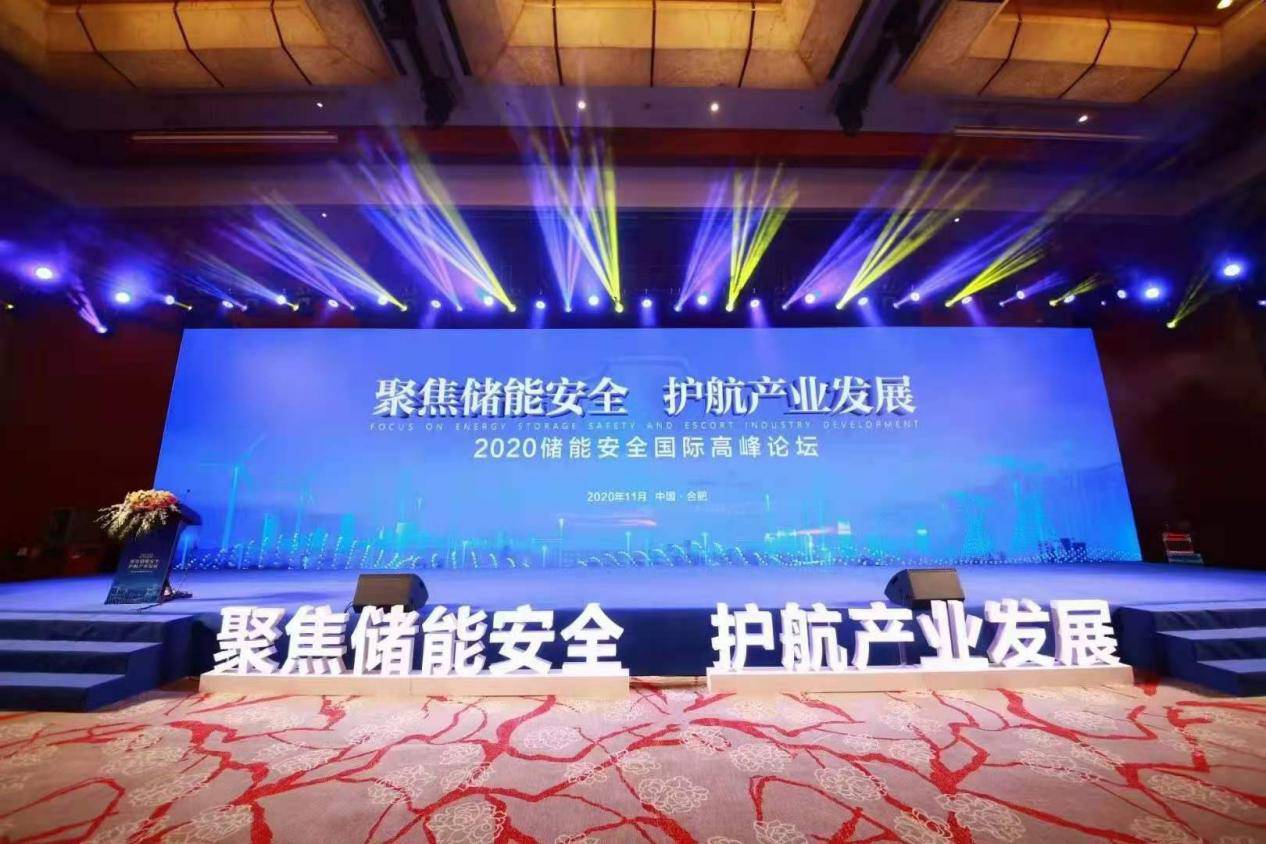
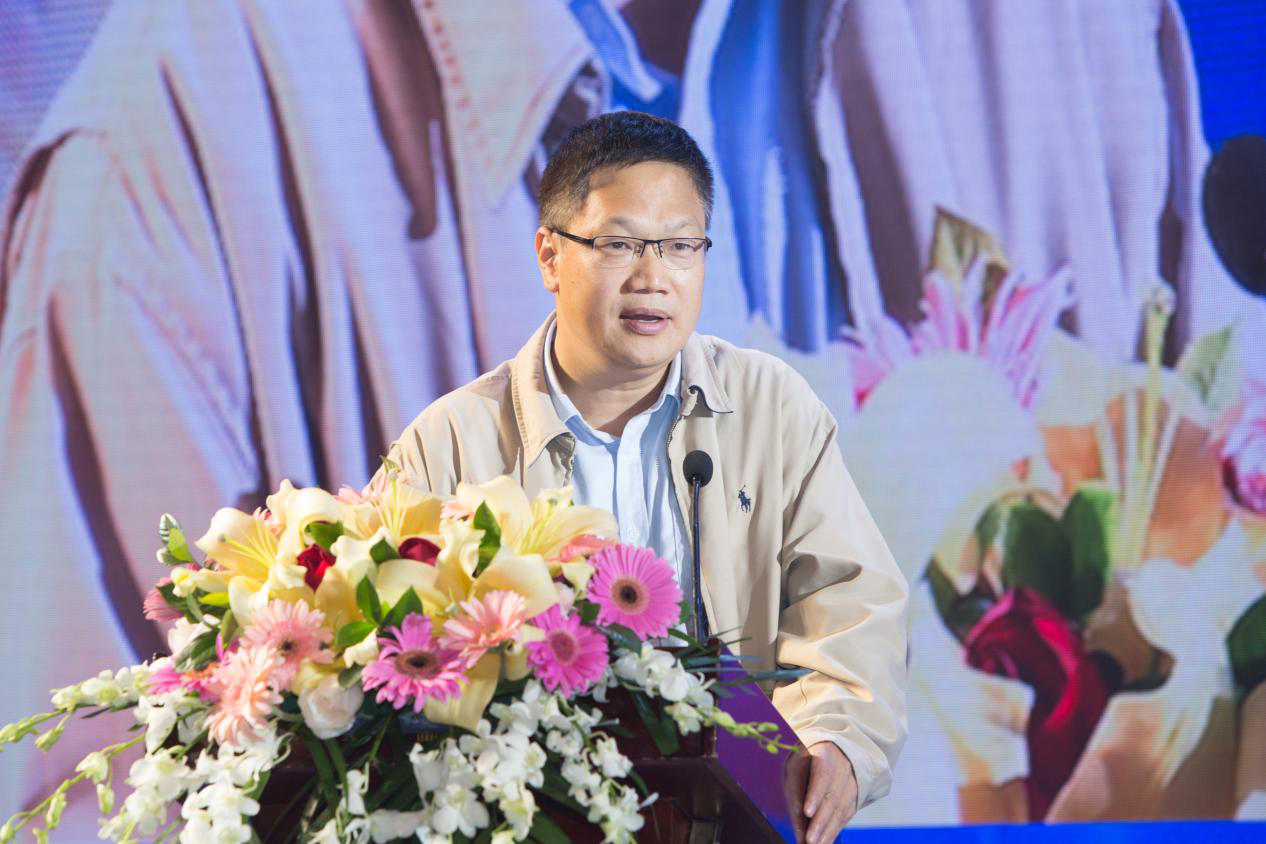
The "2020 Energy Storage Safety International Summit Forum" was guided by Hefei Science and Technology Bureau and the Management Committee of Hefei High tech Industrial Development Zone, hosted by the State Key Laboratory of Fire Science of University of Science and Technology of China and Anhui Zhongke Zhonghuan Defense Equipment Technology Co., Ltd., and co organized by Zhongguancun Energy Storage Industry Technology Alliance, State Grid Anhui Electric Power Co., Ltd. and Hangzhou Gaote Electronic Equipment Co., Ltd. At the meeting, Professor Ma Fuyuan, the chief scientist of electrochemical energy storage of Zhejiang Energy Group Research Institute, delivered a keynote speech around "high-power energy storage batteries and their application in energy storage systems".
Energy storage batteries are divided into energy type and power type in applications. Power type batteries are urgently needed, especially in frequency regulation. In addition, in the application scenarios of energy storage in the power system, there are high power requirements for functions such as smoothing power fluctuations, participating in system peak load management, improving transmission capacity, improving power quality, participating in system frequency regulation, and enhancing operational safety.
Firstly, introduce the application of high-power batteries in frequency modulation. Energy storage frequency regulation requires hundreds or even thousands of charging and discharging cycles per day, with high requirements for battery characteristics, battery life, and energy storage system level design. For energy storage frequency modulation batteries, a large power is required to respond to the power demand of frequency modulation, and the discharge rate is required to be at least 4C or above. Therefore, many batteries have been excluded from the frequency modulation market application field. For example, ordinary lithium batteries can only achieve 2C discharge, while lead-acid batteries can only achieve 0.1C discharge.
On September 19, 2015, the East China Jinsu DC experienced a dual machine lockout, resulting in an instantaneous power loss of 4900 megawatts. The frequency of East China Power Grid dropped from 49.9 Hz to 49.5 Hz, and this power drop lasted for 4 minutes before recovering to 50 Hz. This is a huge risk for the power system, especially for safe and stable operation. At this point, a high-power energy storage battery is needed to boost the power, so that the grid frequency will not drop.
For example, the major power outage in the UK (August 9, 2019) was caused by a high proportion of wind power (~35%). In the event of a sudden shutdown of a gas-fired power plant, the inertia of the wind turbines could not support the grid during the frequency drop period. The energy storage configured in the grid was pumped storage, which did not respond quickly enough to keep up. After the system frequency dropped, the wind turbines' ability to withstand low frequencies was insufficient, resulting in a large number of power outages. In such a situation, if there is a quick response support, it will not cause widespread power outages.
High power batteries can be used in other application scenarios, such as wind power startup and hydropower startup. In addition, flywheel energy storage can also achieve high power, and lead carbon batteries, lithium titanate batteries, supercapacitors, and nickel zinc batteries can also form high power. These batteries have high power, but the corresponding costs are also high.
As an application of energy storage batteries, it is necessary to balance safety, cost, cycle life, as well as energy density and power density requirements. Several types of batteries currently in use on the market, such as lead-acid batteries, nickel zinc batteries, and lithium-ion batteries, have their own strengths and weaknesses.
In previous battery systems, batteries were divided into aqueous and organic types. Commonly used batteries such as lead-acid batteries, nickel cadmium batteries, nickel hydrogen batteries, and flow batteries all belong to aqueous batteries, while later lithium-ion batteries belong to organic electrolyte batteries.
It is even more difficult to safely control high-power batteries. Although lithium batteries, especially lithium titanate batteries, have high-power characteristics, most lithium batteries in the energy storage market are used at 0.2-1C, with a maximum of 2C, while lithium titanate batteries are used at a maximum of 3C.
Water based batteries are essentially safe. Simultaneously possessing combustibles, combustibles, and ignition sources (also known as reaching the ignition point) is a necessary condition for combustion and fire occurrence. To extinguish a fire, it is necessary to break one or more links between these elements or change the balance between them.
Lithium batteries fully meet these three conditions under certain conditions, while water-based batteries do not have these three factors, such as the absence of an ignition source, which is essentially safer.
Why do lithium batteries have such significant safety hazards? Because lithium is the most reactive metal, its organic electrolyte is similar to gasoline and alcohol. In addition, the positive electrode releases oxygen to support combustion, the separator is easily punctured, and thermal shrinkage can cause internal short circuits. In addition, due to overcharging and overdischarging of the battery, the multi-layered structure inside makes it difficult to dissipate heat, which can easily lead to uncontrolled temperature rise.
Some process factors, such as conductive dust on the surface of the diaphragm, misalignment of positive and negative electrodes, burrs on the electrode plate, etc., during use, such as low-temperature charging, high current charging, rapid degradation of negative electrode performance, as well as abuse, squeezing, and oscillation, are all induced causes of thermal runaway. During use, charging and discharging, as well as overcharging and overdischarging, are all causes of short circuits. The process starts with a certain battery cell heating up, generating side reactions, releasing heat, leading to thermal runaway, and then causing an explosion. By the time it catches fire or explodes, heat diffusion has already formed, ultimately causing the entire system to lose control.
The safety issues of energy storage in South Korea have indeed sounded the alarm for the entire energy storage industry, and of course, fires have also occurred in other places.
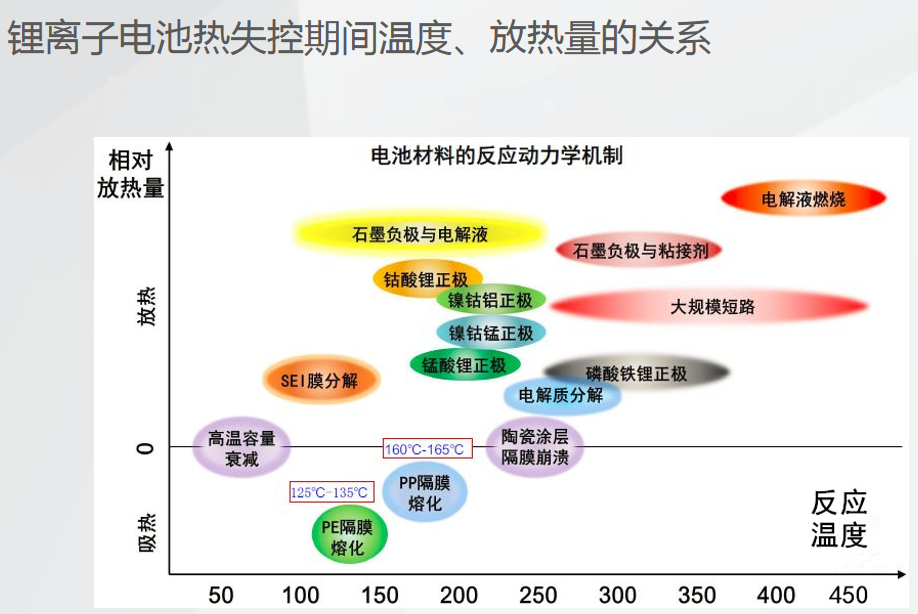
In terms of prevention, the substances in lithium-ion batteries will decompose into corresponding combustion supporting substances, and at a certain temperature, the amount of heat released is quite large, which is the relationship between heat release and temperature.
In fact, most of the gases released by thermal runaway are flammable gases, which are now mainly controlled by fire extinguishing agents. Zhongke Zhonghuan has done a good job in this regard, using perfluorohexane as the fire extinguishing agent. And heptafluoropropane has a relatively low price, and everyone is using it. Water based fire extinguishing agents can be used in most firefighting scenarios, but lithium battery fire extinguishing must be completely isolated from oxygen, otherwise it will have a counterproductive effect.
Now Zhejiang Energy Group has made a key layout in the field of high safety water-based zinc batteries. In the nickel zinc battery field, it has developed a high-power 10 MW/1 MWh energy storage frequency modulation power station system. In the water-based zinc ion battery field, it has specifically established Zhongke Energy Storage Company to develop the application of energy storage batteries.
The so-called nickel zinc battery has nickel hydroxide as the positive electrode and zinc as the negative electrode. Nickel zinc batteries have the characteristics of high discharge power, long cycle life, safe use, environmental protection, low cost, good high and low temperature performance, and high reliability.
The energy storage system composed of nickel zinc batteries has a cycle life more than 10 times longer than lead-acid batteries, significantly increasing energy density, eliminating heavy metal pollution, and reducing environmental pressure caused by battery retirement. The biggest feature of nickel zinc batteries is their ability to discharge at high power, making them very suitable for energy storage and frequency regulation applications.
According to existing rules, a frequency modulation compensation or assessment of 150 points per 10000 kWh is equivalent to 15 yuan per kWh, with considerable benefits. The Zhejiang Energy Group Research Institute expects to increase the integration of energy storage systems into the plant power bus of the unit, which can respond to a frequency regulation command within a hundred milliseconds. By absorbing or releasing energy, the active power value of the unit output assessment point can be adjusted to achieve auxiliary frequency regulation function.
The revenue from a single frequency regulation without an energy storage system is around 1.4 million yuan. If an energy storage system is added, the power station can achieve a revenue of approximately 3.76 million yuan. At present, the Zhejiang Energy Group Research Institute is working on this matter to generate good benefits for the power plant.
The "2020 Energy Storage Safety International Summit Forum" was guided by Hefei Science and Technology Bureau and the Management Committee of Hefei High tech Industrial Development Zone, hosted by the State Key Laboratory of Fire Science of University of Science and Technology of China and Anhui Zhongke Zhonghuan Defense Equipment Technology Co., Ltd., and co organized by Zhongguancun Energy Storage Industry Technology Alliance, State Grid Anhui Electric Power Co., Ltd. and Hangzhou Gaote Electronic Equipment Co., Ltd. At the meeting, Professor Ma Fuyuan, the chief scientist of electrochemical energy storage of Zhejiang Energy Group Research Institute, delivered a keynote speech around "high-power energy storage batteries and their application in energy storage systems".
Energy storage batteries are divided into energy type and power type in applications. Power type batteries are urgently needed, especially in frequency regulation. In addition, in the application scenarios of energy storage in the power system, there are high power requirements for functions such as smoothing power fluctuations, participating in system peak load management, improving transmission capacity, improving power quality, participating in system frequency regulation, and enhancing operational safety.
Firstly, introduce the application of high-power batteries in frequency modulation. Energy storage frequency regulation requires hundreds or even thousands of charging and discharging cycles per day, with high requirements for battery characteristics, battery life, and energy storage system level design. For energy storage frequency modulation batteries, a large power is required to respond to the power demand of frequency modulation, and the discharge rate is required to be at least 4C or above. Therefore, many batteries have been excluded from the frequency modulation market application field. For example, ordinary lithium batteries can only achieve 2C discharge, while lead-acid batteries can only achieve 0.1C discharge.
On September 19, 2015, the East China Jinsu DC experienced a dual machine lockout, resulting in an instantaneous power loss of 4900 megawatts. The frequency of East China Power Grid dropped from 49.9 Hz to 49.5 Hz, and this power drop lasted for 4 minutes before recovering to 50 Hz. This is a huge risk for the power system, especially for safe and stable operation. At this point, a high-power energy storage battery is needed to boost the power, so that the grid frequency will not drop.
For example, the major power outage in the UK (August 9, 2019) was caused by a high proportion of wind power (~35%). In the event of a sudden shutdown of a gas-fired power plant, the inertia of the wind turbines could not support the grid during the frequency drop period. The energy storage configured in the grid was pumped storage, which did not respond quickly enough to keep up. After the system frequency dropped, the wind turbines' ability to withstand low frequencies was insufficient, resulting in a large number of power outages. In such a situation, if there is a quick response support, it will not cause widespread power outages.
High power batteries can be used in other application scenarios, such as wind power startup and hydropower startup. In addition, flywheel energy storage can also achieve high power, and lead carbon batteries, lithium titanate batteries, supercapacitors, and nickel zinc batteries can also form high power. These batteries have high power, but the corresponding costs are also high.
As an application of energy storage batteries, it is necessary to balance safety, cost, cycle life, as well as energy density and power density requirements. Several types of batteries currently in use on the market, such as lead-acid batteries, nickel zinc batteries, and lithium-ion batteries, have their own strengths and weaknesses.
In previous battery systems, batteries were divided into aqueous and organic types. Commonly used batteries such as lead-acid batteries, nickel cadmium batteries, nickel hydrogen batteries, and flow batteries all belong to aqueous batteries, while later lithium-ion batteries belong to organic electrolyte batteries.
It is even more difficult to safely control high-power batteries. Although lithium batteries, especially lithium titanate batteries, have high-power characteristics, most lithium batteries in the energy storage market are used at 0.2-1C, with a maximum of 2C, while lithium titanate batteries are used at a maximum of 3C.
Water based batteries are essentially safe. Simultaneously possessing combustibles, combustibles, and ignition sources (also known as reaching the ignition point) is a necessary condition for combustion and fire occurrence. To extinguish a fire, it is necessary to break one or more links between these elements or change the balance between them.
Lithium batteries fully meet these three conditions under certain conditions, while water-based batteries do not have these three factors, such as the absence of an ignition source, which is essentially safer.
Why do lithium batteries have such significant safety hazards? Because lithium is the most reactive metal, its organic electrolyte is similar to gasoline and alcohol. In addition, the positive electrode releases oxygen to support combustion, the separator is easily punctured, and thermal shrinkage can cause internal short circuits. In addition, due to overcharging and overdischarging of the battery, the multi-layered structure inside makes it difficult to dissipate heat, which can easily lead to uncontrolled temperature rise.
Some process factors, such as conductive dust on the surface of the diaphragm, misalignment of positive and negative electrodes, burrs on the electrode plate, etc., during use, such as low-temperature charging, high current charging, rapid degradation of negative electrode performance, as well as abuse, squeezing, and oscillation, are all induced causes of thermal runaway. During use, charging and discharging, as well as overcharging and overdischarging, are all causes of short circuits. The process starts with a certain battery cell heating up, generating side reactions, releasing heat, leading to thermal runaway, and then causing an explosion. By the time it catches fire or explodes, heat diffusion has already formed, ultimately causing the entire system to lose control.
The safety issues of energy storage in South Korea have indeed sounded the alarm for the entire energy storage industry, and of course, fires have also occurred in other places.
In terms of prevention, the substances in lithium-ion batteries will decompose into corresponding combustion supporting substances, and at a certain temperature, the amount of heat released is quite large, which is the relationship between heat release and temperature.
In fact, most of the gases released by thermal runaway are flammable gases, which are now mainly controlled by fire extinguishing agents. Zhongke Zhonghuan has done a good job in this regard, using perfluorohexane as the fire extinguishing agent. And heptafluoropropane has a relatively low price, and everyone is using it. Water based fire extinguishing agents can be used in most firefighting scenarios, but lithium battery fire extinguishing must be completely isolated from oxygen, otherwise it will have a counterproductive effect.
Now Zhejiang Energy Group has made a key layout in the field of high safety water-based zinc batteries. In the nickel zinc battery field, it has developed a high-power 10 MW/1 MWh energy storage frequency modulation power station system. In the water-based zinc ion battery field, it has specifically established Zhongke Energy Storage Company to develop the application of energy storage batteries.
The so-called nickel zinc battery has nickel hydroxide as the positive electrode and zinc as the negative electrode. Nickel zinc batteries have the characteristics of high discharge power, long cycle life, safe use, environmental protection, low cost, good high and low temperature performance, and high reliability.
The energy storage system composed of nickel zinc batteries has a cycle life more than 10 times longer than lead-acid batteries, significantly increasing energy density, eliminating heavy metal pollution, and reducing environmental pressure caused by battery retirement. The biggest feature of nickel zinc batteries is their ability to discharge at high power, making them very suitable for energy storage and frequency regulation applications.
According to existing rules, a frequency modulation compensation or assessment of 150 points per 10000 kWh is equivalent to 15 yuan per kWh, with considerable benefits. The Zhejiang Energy Group Research Institute expects to increase the integration of energy storage systems into the plant power bus of the unit, which can respond to a frequency regulation command within a hundred milliseconds. By absorbing or releasing energy, the active power value of the unit output assessment point can be adjusted to achieve auxiliary frequency regulation function.
The revenue from a single frequency regulation without an energy storage system is around 1.4 million yuan. If an energy storage system is added, the power station can achieve a revenue of approximately 3.76 million yuan. At present, the Zhejiang Energy Group Research Institute is working on this matter to generate good benefits for the power plant.


