



【Zhongke Zhonghuan】Professor Wang Zhirong from Nanjing University of Technology: Study on the Hazards of Thermal runaway Products in Lithium ion Batteries
Release Date:2020-12-09 Source: View count:787
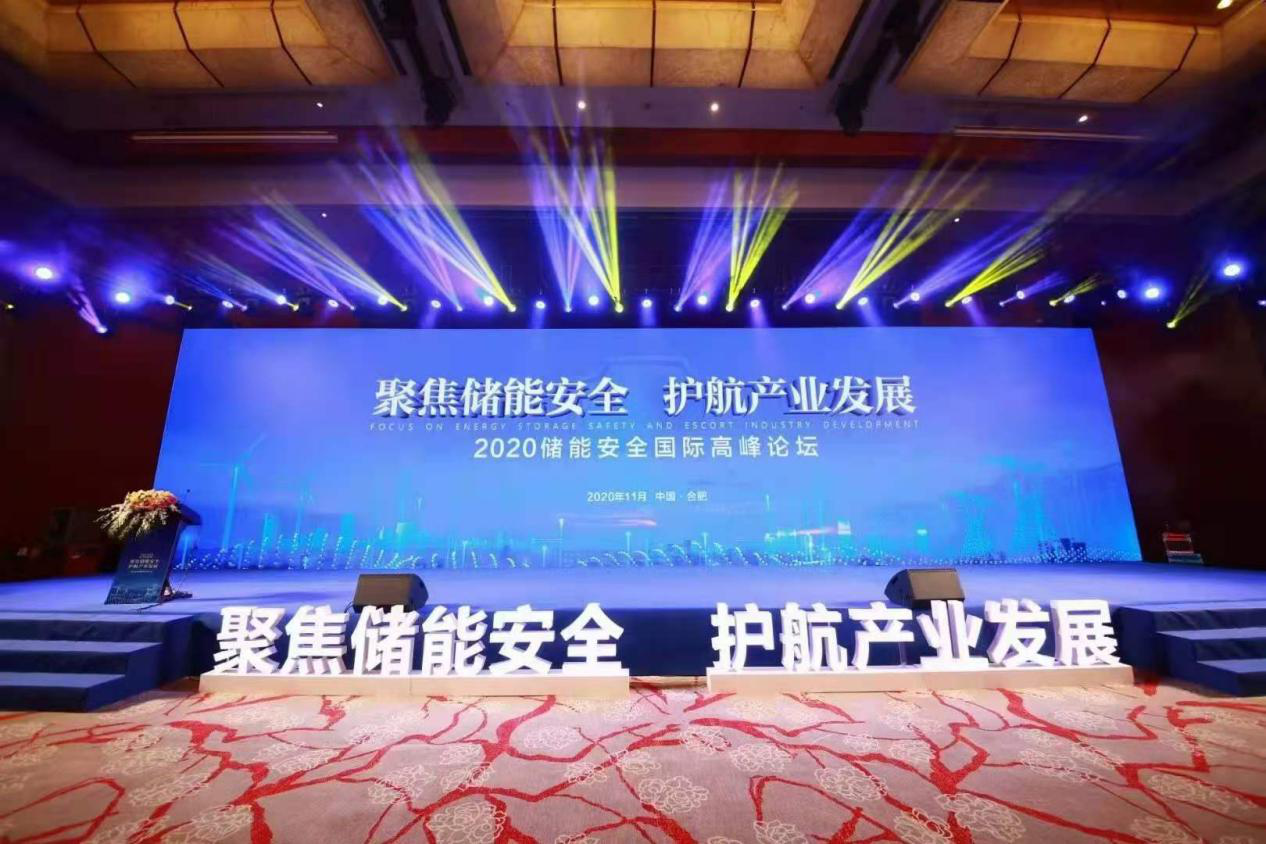
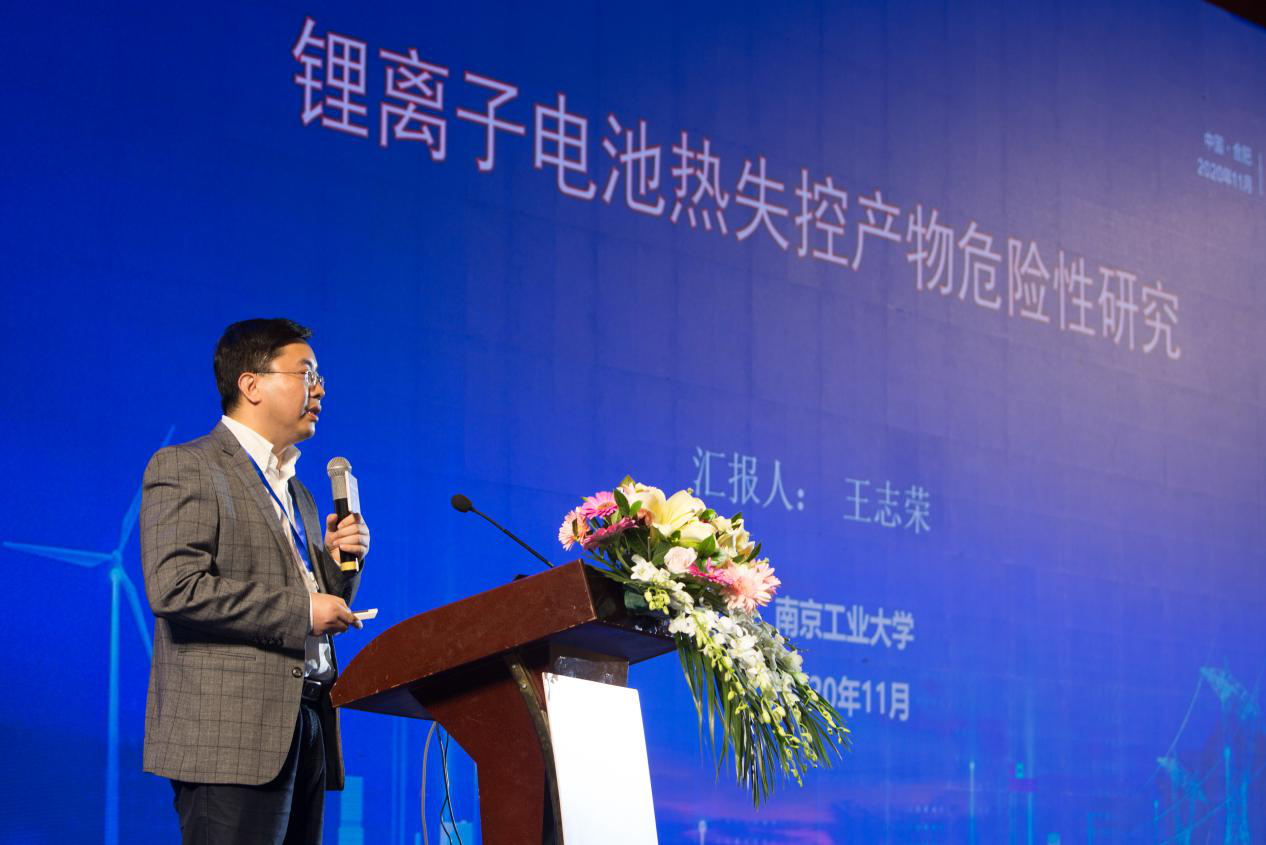
On November 18-20, 2020, the 2020 International Summit on Energy Storage Safety was held at the Century Jinyuan Hotel in Hefei. Professor Wang Zhirong from Nanjing University of Technology delivered a keynote speech entitled "Research on the Hazards of Thermal runaway Products in Lithium ion Batteries", which explained the research background, thermal runaway gas production process and its release gas hazardous characteristics, thermal runaway solid product hazard characteristics and formation mechanism, and research prospects from four aspects.
Firstly, the research background.
In recent years, there have been multiple recalls of important equipment related to lithium-ion batteries internationally, including the 2013 Sony and 2016 Samsung NOTE7 recalls. This indicates that lithium-ion battery electrical equipment may also have some safety issues, which have had a negative impact on the industry.
From the statistics of lithium battery accidents, most of them are caused by thermal runaway, and the products of thermal runaway include flammable gases and solid particles, which can easily lead to fires. Domestic and foreign scholars have conducted relevant research on the gas and solid products produced by lithium-ion batteries, analyzing the occurrence of gas and solid products at different stages, battery types, and processes.
Secondly, the characteristics of gas production and release during thermal runaway of lithium-ion batteries.
Quantitative calculation and analysis are conducted from five aspects: experimental methods, laws of gas production process, composition and content analysis, comparative analysis of gas production due to thermal runaway in different atmospheric environments, and the gas explosion hazard caused by thermal runaway of lithium ions in the air under general conditions.
The research object selected is the widely used 18650 lithium-ion single battery. In terms of research methods, an experimental device was built for electric heating to cause thermal runaway of the battery. The temperature during the thermal runaway process was monitored, including the gas produced by the thermal runaway, the gas production rate, quantitative composition analysis, and the explosive limit of the gas mixture. Some tests were also conducted to explore the hazards of the gas and solid produced.
Through research, it has been found that the process of thermal runaway gas production in lithium-ion batteries includes four different stages: self heating stage, gas release valve opening stage, followed by reaching the critical temperature, reaching the thermal runaway stage, and finally the thermal runaway extinction stage. This is in indoor spaces. If it is in a small space, the thermal runaway stage is the same, but the intensity of combustion and the products may vary.
The study also found that the state of charge (SOC) and charge of lithium-ion batteries have a significant impact on the process of thermal runaway and the generation of gas during thermal runaway. The severity of thermal runaway varies among different SOC, the speed of gas flow generated varies, and there are differences in both particulate solid products and gas products. The gas composition generated by lithium-ion batteries is relatively complex, including inert gases such as carbon dioxide and nitrogen, as well as flammable and explosive carbon monoxide, hydrogen, methane, ethane, and other hydrocarbons, with nitrogen and carbon dioxide being the most abundant. Comparing and analyzing the gases produced by thermal runaway in different atmospheric environments, it was found that the degree of temperature change during the thermal runaway reaction did not differ significantly between air and argon environments.
Through component analysis, test results, and comparison of phenomena, theoretical analysis has been conducted on the main components. For example, there are many possibilities for the production of carbon dioxide. Here are six examples:
1) At 80-120 ℃, the SEI film undergoes a decomposition reaction upon heating, producing carbon dioxide;
2) At 200-225 ℃, the electrolyte decomposition reaction will generate carbon dioxide;
3) At 150-330 ℃, the positive electrode reacts with the electrolyte to generate carbon dioxide;
4) During the thermal runaway of lithium-ion batteries, the anode of the battery releases a certain amount of lithium according to different charging amounts at high temperatures. When lithium comes into contact with air, a large amount of heat is generated, which can cause graphite in the negative electrode material to react with oxygen and produce carbon dioxide;
5) Many solid electrolytes in lithium-ion batteries can produce carbon dioxide by reacting with water or hydrogen fluoride;
6) Lithium carbonate can be produced at the negative electrode of a lithium battery or through ion reduction reactions between the positive and negative electrodes. Lithium carbonate can react with hydrogen fluoride in the battery to produce carbon dioxide when heated.
There are also many possibilities for the production of hydrogen gas, such as the direct reaction between lithium and water to produce hydrogen gas, the reaction between lithium and hydrogen fluoride generated by the reaction to produce hydrogen gas, and the reaction between some adhesives, binders, and lithium oxide, as well as some carboxymethyl reactions, all of which can produce hydrogen gas.
Research has found that incomplete combustion of many combustible substances can produce carbon monoxide, as well as the reaction between lithium ions at the positive electrode and carbon dioxide, and the high-temperature reaction of lithium carbonate with carbon dioxide in graphite.
Through experimental research and analysis of the danger of gas combustion and explosion caused by thermal runaway, it was found that there are significant differences in the phenomenon of thermal runaway combustion and explosion between air environment and inert gas environment. The thermal runaway process of lithium-ion batteries in argon environment is very short, and no large amount of smoke is produced before thermal runaway. The reaction process is not intense in air environment.
Through theoretical calculations and experimental testing, it was found that the explosive limit range of gas mixtures generated by thermal runaway of lithium-ion batteries is relatively large (8%~52%). This explains why fire accidents often occur during experiments, including industrial and commercial applications, because high concentrations of flammable gases are produced. If there is no combustion in the initial stage, only injection, leakage, and mixing with air in a limited space, it will form an explosive space, so explosion prevention should also be considered.
Once again, the hazardous characteristics and formation mechanism of solid products caused by thermal runaway.
Research has also been conducted on solids from experimental methods, including composition, thermal stability, explosion hazard, harmfulness, and formation mechanism. Collect solid powder generated through experiments, and conduct some testing and research analysis on the solid powder.
Through research, it has been found that solid products are also a mixture, and the composition and formation process mechanism are very complex. On the one hand, they are solid substances sprayed after thermal runaway reactions, and on the other hand, they are products of combustion in the air after spraying.
Through testing, it was found that the carbon content of solid reactants is approximately 68% to 69%, and the majority of solid products are organic chemicals, including carbonates, metals, metal oxides, etc. Further thermal analysis revealed that solid products may form metal mixtures at high temperatures, and different SOC and heating rates also have a certain impact on thermal stability. The composition of the products also varies in different environments.
A particle size test was conducted on solid particles generated by thermal runaway of lithium-ion batteries. Through the test, it was found that the particle size range of dust particles in the air is 8.49 to 300 microns. The particle size is small, but the specific gravity is relatively high, so it is not easy to form dust clouds and dust explosions will not occur.
A simple explanation and analysis were provided on the mechanism of solid product generation. Most of the solid products generated by thermal runaway of lithium-ion batteries are due to incomplete combustion of the electrolyte, resulting from the reaction between the electrolyte and the electrolyte. Overall, the main products of thermal runaway in lithium-ion batteries are organosilicon, benzene series and their derivatives, unsaturated hydrocarbons, hydroxyl and carbonyl compounds, and esters. Analyzing the chemical generation mechanism of solid products, gases emitted from thermal runaway include methane, propane, and ethane, which undergo chemical reactions under certain conditions to produce solid substances. Under the action of ethylene, the formation of carboxyl and hydroxyl compounds may undergo chemical reactions, including the reaction of some ester solid substances under the action of methyl radicals and chlorine radicals, forming solid substances.
Finally, the research outlook.
At present, experimental research is conducted on a specific type of lithium-ion battery size and limited capacity. The gas composition will change under different conditions, so a large number of experiments are needed. Due to different types of batteries and environmental conditions, the products may change under normal and negative oxygen conditions, as well as high and low voltage environments. In addition, experiments can be conducted by setting up inert and vacuum environments to observe whether there are any other changes in the product. The experiments here are all aimed at single batteries. Under the condition of thermal runaway propagation in the battery pack, gas and solid products may change, and a large amount of experimental data and on-site data need to be compared to establish a more accurate prediction model.
On November 18-20, 2020, the 2020 International Summit on Energy Storage Safety was held at the Century Jinyuan Hotel in Hefei. Professor Wang Zhirong from Nanjing University of Technology delivered a keynote speech entitled "Research on the Hazards of Thermal runaway Products in Lithium ion Batteries", which explained the research background, thermal runaway gas production process and its release gas hazardous characteristics, thermal runaway solid product hazard characteristics and formation mechanism, and research prospects from four aspects.
Firstly, the research background.
In recent years, there have been multiple recalls of important equipment related to lithium-ion batteries internationally, including the 2013 Sony and 2016 Samsung NOTE7 recalls. This indicates that lithium-ion battery electrical equipment may also have some safety issues, which have had a negative impact on the industry.
From the statistics of lithium battery accidents, most of them are caused by thermal runaway, and the products of thermal runaway include flammable gases and solid particles, which can easily lead to fires. Domestic and foreign scholars have conducted relevant research on the gas and solid products produced by lithium-ion batteries, analyzing the occurrence of gas and solid products at different stages, battery types, and processes.
Secondly, the characteristics of gas production and release during thermal runaway of lithium-ion batteries.
Quantitative calculation and analysis are conducted from five aspects: experimental methods, laws of gas production process, composition and content analysis, comparative analysis of gas production due to thermal runaway in different atmospheric environments, and the gas explosion hazard caused by thermal runaway of lithium ions in the air under general conditions.
The research object selected is the widely used 18650 lithium-ion single battery. In terms of research methods, an experimental device was built for electric heating to cause thermal runaway of the battery. The temperature during the thermal runaway process was monitored, including the gas produced by the thermal runaway, the gas production rate, quantitative composition analysis, and the explosive limit of the gas mixture. Some tests were also conducted to explore the hazards of the gas and solid produced.
Through research, it has been found that the process of thermal runaway gas production in lithium-ion batteries includes four different stages: self heating stage, gas release valve opening stage, followed by reaching the critical temperature, reaching the thermal runaway stage, and finally the thermal runaway extinction stage. This is in indoor spaces. If it is in a small space, the thermal runaway stage is the same, but the intensity of combustion and the products may vary.
The study also found that the state of charge (SOC) and charge of lithium-ion batteries have a significant impact on the process of thermal runaway and the generation of gas during thermal runaway. The severity of thermal runaway varies among different SOC, the speed of gas flow generated varies, and there are differences in both particulate solid products and gas products. The gas composition generated by lithium-ion batteries is relatively complex, including inert gases such as carbon dioxide and nitrogen, as well as flammable and explosive carbon monoxide, hydrogen, methane, ethane, and other hydrocarbons, with nitrogen and carbon dioxide being the most abundant. Comparing and analyzing the gases produced by thermal runaway in different atmospheric environments, it was found that the degree of temperature change during the thermal runaway reaction did not differ significantly between air and argon environments.
Through component analysis, test results, and comparison of phenomena, theoretical analysis has been conducted on the main components. For example, there are many possibilities for the production of carbon dioxide. Here are six examples:
1) At 80-120 ℃, the SEI film undergoes a decomposition reaction upon heating, producing carbon dioxide;
2) At 200-225 ℃, the electrolyte decomposition reaction will generate carbon dioxide;
3) At 150-330 ℃, the positive electrode reacts with the electrolyte to generate carbon dioxide;
4) During the thermal runaway of lithium-ion batteries, the anode of the battery releases a certain amount of lithium according to different charging amounts at high temperatures. When lithium comes into contact with air, a large amount of heat is generated, which can cause graphite in the negative electrode material to react with oxygen and produce carbon dioxide;
5) Many solid electrolytes in lithium-ion batteries can produce carbon dioxide by reacting with water or hydrogen fluoride;
6) Lithium carbonate can be produced at the negative electrode of a lithium battery or through ion reduction reactions between the positive and negative electrodes. Lithium carbonate can react with hydrogen fluoride in the battery to produce carbon dioxide when heated.
There are also many possibilities for the production of hydrogen gas, such as the direct reaction between lithium and water to produce hydrogen gas, the reaction between lithium and hydrogen fluoride generated by the reaction to produce hydrogen gas, and the reaction between some adhesives, binders, and lithium oxide, as well as some carboxymethyl reactions, all of which can produce hydrogen gas.
Research has found that incomplete combustion of many combustible substances can produce carbon monoxide, as well as the reaction between lithium ions at the positive electrode and carbon dioxide, and the high-temperature reaction of lithium carbonate with carbon dioxide in graphite.
Through experimental research and analysis of the danger of gas combustion and explosion caused by thermal runaway, it was found that there are significant differences in the phenomenon of thermal runaway combustion and explosion between air environment and inert gas environment. The thermal runaway process of lithium-ion batteries in argon environment is very short, and no large amount of smoke is produced before thermal runaway. The reaction process is not intense in air environment.
Through theoretical calculations and experimental testing, it was found that the explosive limit range of gas mixtures generated by thermal runaway of lithium-ion batteries is relatively large (8%~52%). This explains why fire accidents often occur during experiments, including industrial and commercial applications, because high concentrations of flammable gases are produced. If there is no combustion in the initial stage, only injection, leakage, and mixing with air in a limited space, it will form an explosive space, so explosion prevention should also be considered.
Once again, the hazardous characteristics and formation mechanism of solid products caused by thermal runaway.
Research has also been conducted on solids from experimental methods, including composition, thermal stability, explosion hazard, harmfulness, and formation mechanism. Collect solid powder generated through experiments, and conduct some testing and research analysis on the solid powder.
Through research, it has been found that solid products are also a mixture, and the composition and formation process mechanism are very complex. On the one hand, they are solid substances sprayed after thermal runaway reactions, and on the other hand, they are products of combustion in the air after spraying.
Through testing, it was found that the carbon content of solid reactants is approximately 68% to 69%, and the majority of solid products are organic chemicals, including carbonates, metals, metal oxides, etc. Further thermal analysis revealed that solid products may form metal mixtures at high temperatures, and different SOC and heating rates also have a certain impact on thermal stability. The composition of the products also varies in different environments.
A particle size test was conducted on solid particles generated by thermal runaway of lithium-ion batteries. Through the test, it was found that the particle size range of dust particles in the air is 8.49 to 300 microns. The particle size is small, but the specific gravity is relatively high, so it is not easy to form dust clouds and dust explosions will not occur.
A simple explanation and analysis were provided on the mechanism of solid product generation. Most of the solid products generated by thermal runaway of lithium-ion batteries are due to incomplete combustion of the electrolyte, resulting from the reaction between the electrolyte and the electrolyte. Overall, the main products of thermal runaway in lithium-ion batteries are organosilicon, benzene series and their derivatives, unsaturated hydrocarbons, hydroxyl and carbonyl compounds, and esters. Analyzing the chemical generation mechanism of solid products, gases emitted from thermal runaway include methane, propane, and ethane, which undergo chemical reactions under certain conditions to produce solid substances. Under the action of ethylene, the formation of carboxyl and hydroxyl compounds may undergo chemical reactions, including the reaction of some ester solid substances under the action of methyl radicals and chlorine radicals, forming solid substances.
Finally, the research outlook.
At present, experimental research is conducted on a specific type of lithium-ion battery size and limited capacity. The gas composition will change under different conditions, so a large number of experiments are needed. Due to different types of batteries and environmental conditions, the products may change under normal and negative oxygen conditions, as well as high and low voltage environments. In addition, experiments can be conducted by setting up inert and vacuum environments to observe whether there are any other changes in the product. The experiments here are all aimed at single batteries. Under the condition of thermal runaway propagation in the battery pack, gas and solid products may change, and a large amount of experimental data and on-site data need to be compared to establish a more accurate prediction model.
- Prev:【Zhongke Zhonghuan】Zhou Xichao, Researcher at the Technology Research and Development Center of State Grid Comprehensive Energy Service Group: Analysis of Safety Issues in Electrochemical Energy Storage Power Plants
- Next:【Zhongke Zhonghuan】Professor Li Jianlin from North China University of Technology: Analysis of Investment Hotspots and Technological Trends in Energy Storage during the 14th Five Year Plan Period


