



【Zhongke Zhonghuan】Zhou Xichao, Researcher at the Technology Research and Development Center of State Grid Comprehensive Energy Service Group: Analysis of Safety Issues in Electrochemical Energy Storage Power Plants
Release Date:2020-12-14 Source: View count:702
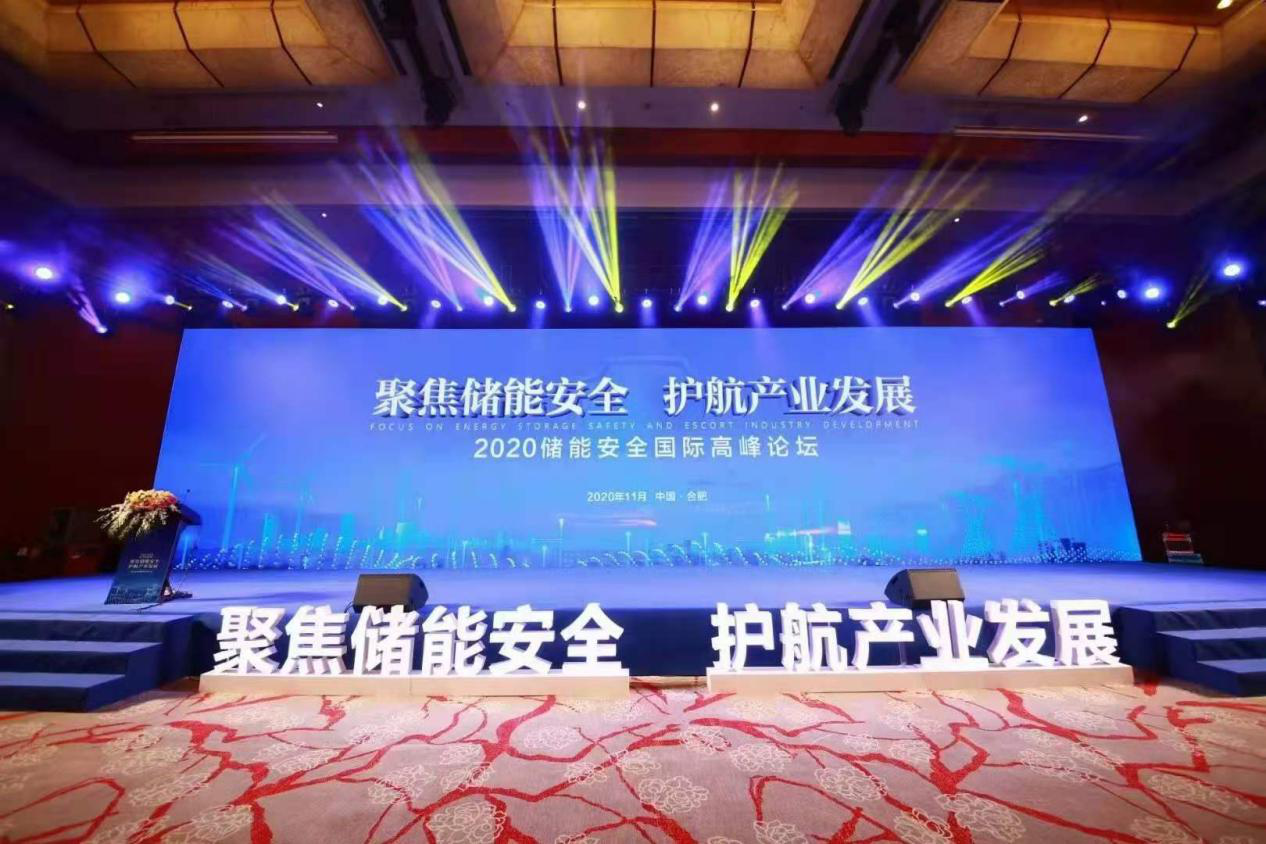
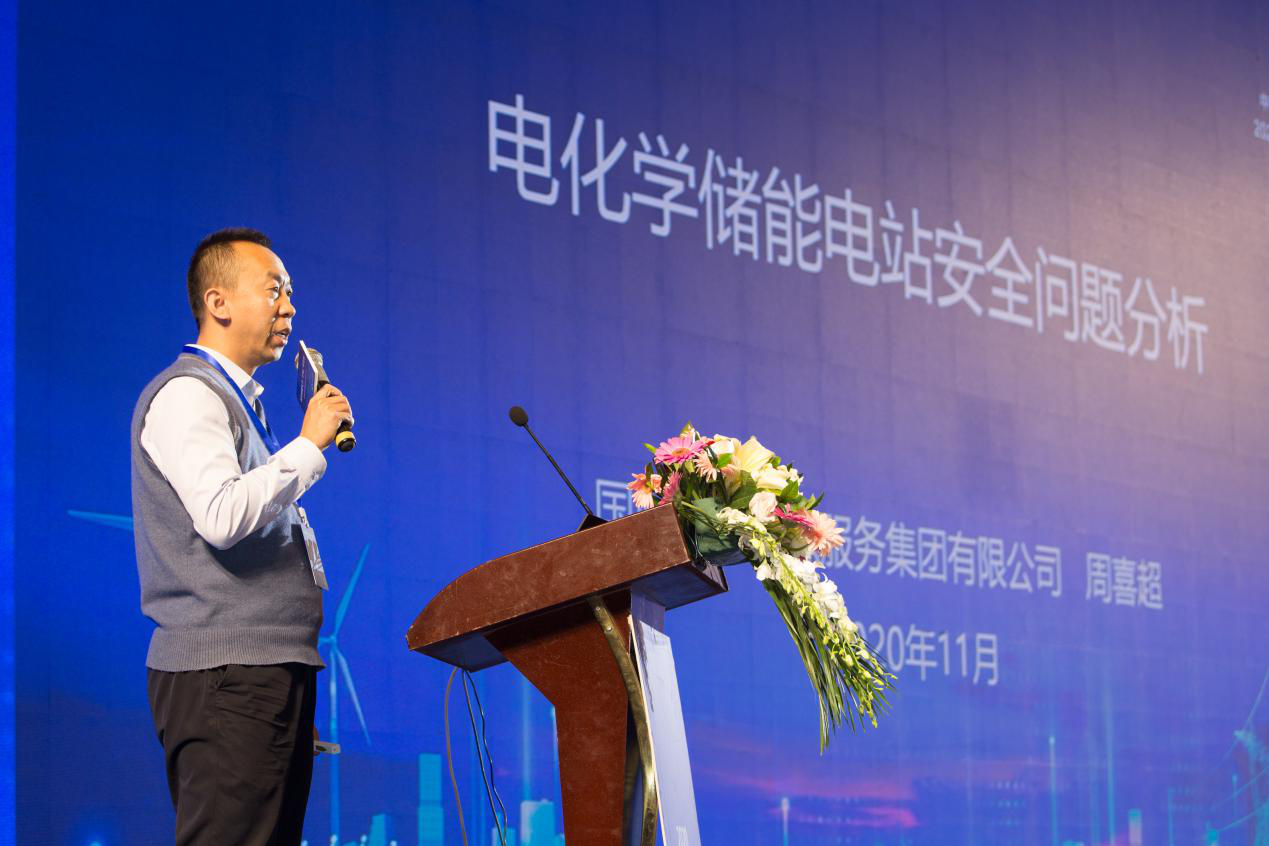
On November 18-20, 2020, the 2020 International Summit on Energy Storage Safety was held at the Century Jinyuan Hotel in Hefei. On the 20th, Zhou Xichao, a researcher at the Science and Technology R&D Center of State Grid Comprehensive Energy Service Group, delivered a keynote speech entitled "Analysis of Safety Issues in Electrochemical Energy Storage Power Plants".
Energy storage technology is a key technology to promote the transition of renewable energy from alternative energy to mainstream energy. It is an important means to solve the problems of large-scale integration of renewable energy and the abandonment of wind and solar power. It can achieve multiple service functions such as improving the output characteristics of renewable energy, peak and frequency regulation, and demand side response. At the same time, it can also adjust the peak and valley of the power grid, improve transmission safety and economy.
As an emerging technology industry, energy storage has broad market development prospects and is a key force in the new round of energy transformation. Energy storage safety is the primary concern for industry development, involving multiple aspects such as equipment layer and system layer. The main content shared today is to analyze the safety issues of domestic invested lithium iron phosphate battery energy storage projects.
In 2019, the global electrochemical energy storage market grew at a rate of approximately 24.0%, while the domestic energy storage market grew at a rate of 48.4%; In the first half of 2020, China added approximately 121.4 MW of electrochemical energy storage to operation, a year-on-year increase of 3.8%. It is expected that by 2030, the cumulative installed capacity of electrochemical energy storage projects in China will reach 100 GW. Lithium ion battery energy storage systems have the advantages of high energy density, high conversion efficiency, low self discharge rate, and long service life in electrochemical energy storage, and have been widely used in engineering. Among them, lithium iron phosphate battery projects have the largest number in China. Lithium ion batteries use organic electrolytes with low boiling points and flammability, and the material system has a high calorific value. In the event of a malfunction in the battery body or equipment, it is easy to trigger exothermic side reactions in the battery materials, causing thermal runaway and potentially evolving into major accidents such as battery combustion and explosion, resulting in serious economic losses and social impacts.
The safety hazards of energy storage power stations mainly include the following aspects: firstly, the high energy density of the battery, the battery capacity of the battery pack is often as high as MWh level, and once a safety problem occurs in a container or a local space, it often causes a chain reaction of battery combustion, leading to the situation getting out of control. The second one is the high-voltage direct current system, which has complex wiring and structure. Once the cables age, the air becomes humid, dust, etc., it may cause insulation degradation, resulting in leakage, ignition, and increased contact resistance and heating of the cables, causing safety accidents. The third issue is the harsh operating conditions, such as high altitude, high wind and sand, and extremely cold weather, which can lead to system false alarms and misoperations, resulting in unforeseeable safety accidents. Overcharging, overdischarging, overcurrent, overheating, as well as short circuits and thermal runaway during battery operation are also safety hazards in energy storage power plants.
There are many and complex reasons for safety issues in energy storage power plants, including factors related to the equipment itself, production processes, system integration, as well as environmental and operational maintenance management issues.
At the level of the device itself, the first step is the selection of energy storage batteries. Non energy storage dedicated batteries, such as automotive, communication, consumer, and digital dedicated batteries, may not have problems in the short term, but over time they will inevitably expose safety hazards; Next is the battery production process technology. There are defects in the battery manufacturing process, such as the possibility of metal pollutant particles being mixed in during the coating process and burrs on the edges of the positive and negative electrode fluids.
In terms of system integration, one is the integration of battery compartment systems, including welding processes, battery combinations, spatial layout, PACK insulation medium selection, etc. How to effectively manage heat inside the compartment is a very complex project, especially in the fire protection configuration of energy storage battery compartments. The second is the integration of energy storage power station systems, which includes the coordinated control of BMS, PCS, and EMS, effective data collection, transmission, and processing to ensure the comprehensive utilization of effective data, and optimization of EMS control strategies for different functional requirements.
In terms of operation and maintenance, electrochemical energy storage power plants have a long operating time cycle, and it is necessary to play the role of an information platform, fulfill the responsibilities of management personnel, effectively utilize data for status assessment and judgment, and timely handle daily maintenance, faults, and other issues through effective maintenance measures, in order to truly ensure the safety of the entire life cycle of the energy storage power plant.
The following coping strategies are for reference only:
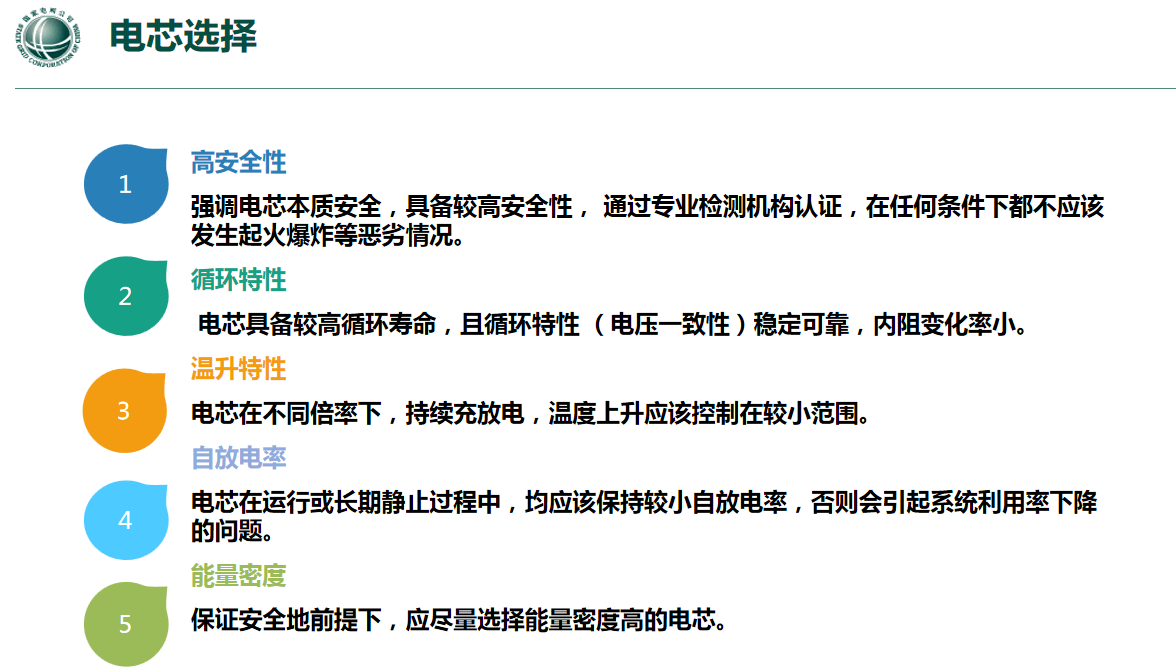
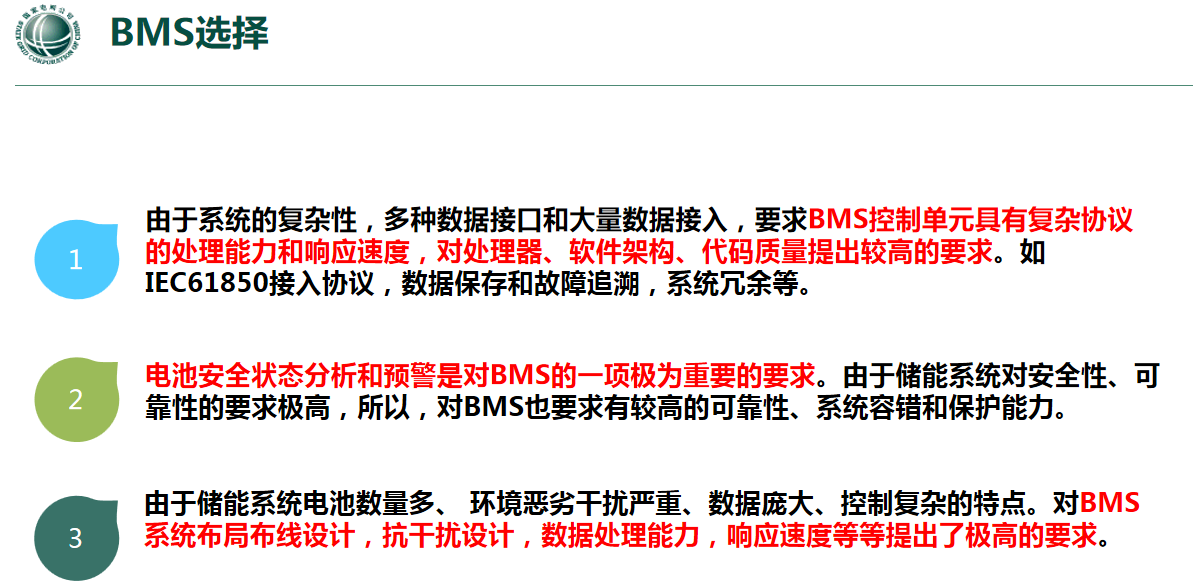
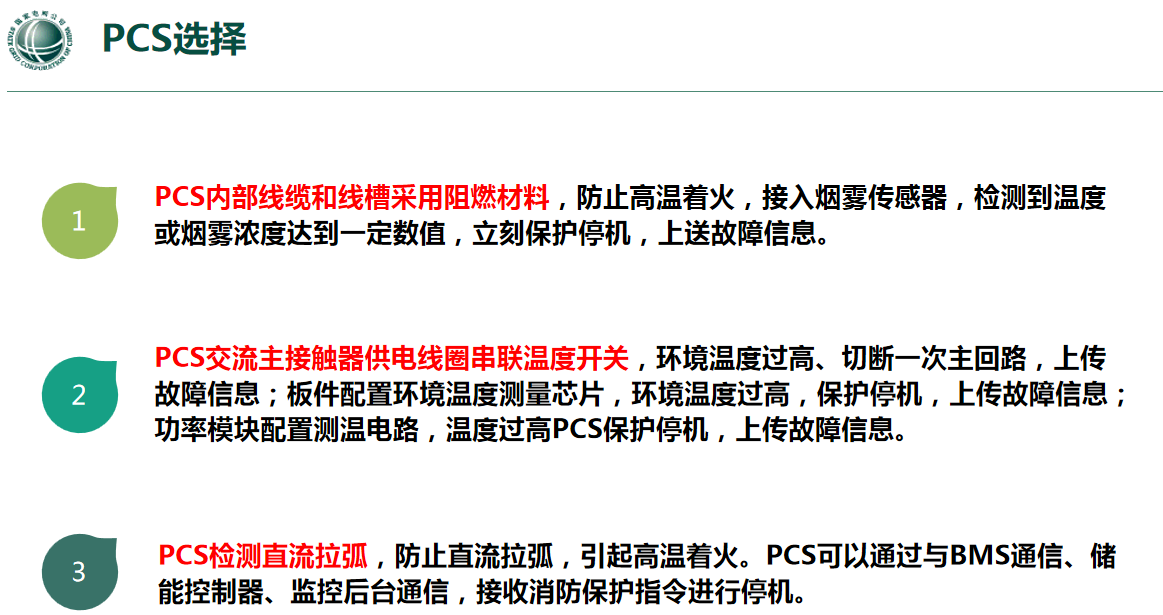
There are still some issues that need attention, especially the thermal management of the battery compartment. If the temperature difference between batteries is too large, it will result in inconsistent aging rates of each battery, affecting the overall performance of the system. In the long run, BMS will expand the estimation error of short board batteries, causing overcharging and overdischarging of short board batteries, leading to safety accidents. Configuring an effective thermal management system can reduce the probability of internal battery accidents evolving into fires; When a thermal runaway occurs, it can to some extent prevent the spread of thermal runaway.
Conduct research on the status assessment of energy storage power stations, and gain knowledge of the effectiveness and reliability of internal data and related models of energy storage power stations; Improve the effective and reliable evaluation algorithm for collecting data from sensing devices, achieve a more accurate understanding of the operating status of energy storage power stations, score and grade the status of key equipment in energy storage power stations, including batteries, accurately and reliably perceive the operating status, and understand the overall operation of the system. Establish a safety warning mechanism for energy storage power stations based on their operating status, providing early warnings for equipment operation defects and system safety status; Realize early prediction of risks such as battery thermal runaway and fire, identify potential thermal runaway of batteries earlier, identify battery characteristics and system operation characteristics, understand the evolution process of the safety status of the battery body and system throughout its entire life cycle, and assist in the formulation of warning strategies.
The most important thing is to establish a systematic fire protection system, deploy safe, efficient, advanced and applicable energy storage fire protection systems, and improve the linkage mechanism of the energy storage power station fire protection system, achieving linkage between the cabin and the cabin, automatic and manual cooperation, and effectively preventing and controlling fire hazards.
Summary and Reflection: The first step is to strengthen the research on the evolution mechanism and control strategy of battery faults. Through experimental analysis, the mechanism characteristics of battery life cycle evolution process, thermal runaway reaction, etc. will be studied to determine sensitivity factors and change patterns. Through data analysis, study the correlation between various security elements, determine the core data collection and processing methods, especially BMS data processing technology. Through algorithm optimization, real-time state evaluation is carried out to achieve early warning of faults.
The second is to optimize the fire protection configuration of energy storage power stations, and how to achieve a balance between safety and economy is a key consideration. Firstly, safety is the red line, and economy is the goal. The safety line should be divided into scenarios and needs, analyzing hazards, determining safety constraints, establishing indicator standards, and based on safety analysis and economic constraints, reasonably optimizing the configuration of the fire protection system for energy storage power plants.
The third is to improve the technical standards and operation and maintenance management norms of energy storage power stations, including establishing standards for fire protection configuration and fire safety acceptance of energy storage power stations; Establish system level performance testing and verification standards for power plants; Improve the technical specifications for the operation and maintenance of energy storage power stations.
The safety of energy storage power stations is a system engineering, which not only requires attention to the construction of energy storage power stations, but also requires sufficient effort to ensure operation and maintenance. The data analysis and evaluation of the operation status of the energy storage power station operation and maintenance platform can assist in establishing a fault warning and prediction system, while supporting the establishment of an operation and maintenance control mechanism to improve the overall quality of operation and maintenance personnel and ensure the safe operation of the energy storage power station in all aspects.
On November 18-20, 2020, the 2020 International Summit on Energy Storage Safety was held at the Century Jinyuan Hotel in Hefei. On the 20th, Zhou Xichao, a researcher at the Science and Technology R&D Center of State Grid Comprehensive Energy Service Group, delivered a keynote speech entitled "Analysis of Safety Issues in Electrochemical Energy Storage Power Plants".
Energy storage technology is a key technology to promote the transition of renewable energy from alternative energy to mainstream energy. It is an important means to solve the problems of large-scale integration of renewable energy and the abandonment of wind and solar power. It can achieve multiple service functions such as improving the output characteristics of renewable energy, peak and frequency regulation, and demand side response. At the same time, it can also adjust the peak and valley of the power grid, improve transmission safety and economy.
As an emerging technology industry, energy storage has broad market development prospects and is a key force in the new round of energy transformation. Energy storage safety is the primary concern for industry development, involving multiple aspects such as equipment layer and system layer. The main content shared today is to analyze the safety issues of domestic invested lithium iron phosphate battery energy storage projects.
In 2019, the global electrochemical energy storage market grew at a rate of approximately 24.0%, while the domestic energy storage market grew at a rate of 48.4%; In the first half of 2020, China added approximately 121.4 MW of electrochemical energy storage to operation, a year-on-year increase of 3.8%. It is expected that by 2030, the cumulative installed capacity of electrochemical energy storage projects in China will reach 100 GW. Lithium ion battery energy storage systems have the advantages of high energy density, high conversion efficiency, low self discharge rate, and long service life in electrochemical energy storage, and have been widely used in engineering. Among them, lithium iron phosphate battery projects have the largest number in China. Lithium ion batteries use organic electrolytes with low boiling points and flammability, and the material system has a high calorific value. In the event of a malfunction in the battery body or equipment, it is easy to trigger exothermic side reactions in the battery materials, causing thermal runaway and potentially evolving into major accidents such as battery combustion and explosion, resulting in serious economic losses and social impacts.
The safety hazards of energy storage power stations mainly include the following aspects: firstly, the high energy density of the battery, the battery capacity of the battery pack is often as high as MWh level, and once a safety problem occurs in a container or a local space, it often causes a chain reaction of battery combustion, leading to the situation getting out of control. The second one is the high-voltage direct current system, which has complex wiring and structure. Once the cables age, the air becomes humid, dust, etc., it may cause insulation degradation, resulting in leakage, ignition, and increased contact resistance and heating of the cables, causing safety accidents. The third issue is the harsh operating conditions, such as high altitude, high wind and sand, and extremely cold weather, which can lead to system false alarms and misoperations, resulting in unforeseeable safety accidents. Overcharging, overdischarging, overcurrent, overheating, as well as short circuits and thermal runaway during battery operation are also safety hazards in energy storage power plants.
There are many and complex reasons for safety issues in energy storage power plants, including factors related to the equipment itself, production processes, system integration, as well as environmental and operational maintenance management issues.
At the level of the device itself, the first step is the selection of energy storage batteries. Non energy storage dedicated batteries, such as automotive, communication, consumer, and digital dedicated batteries, may not have problems in the short term, but over time they will inevitably expose safety hazards; Next is the battery production process technology. There are defects in the battery manufacturing process, such as the possibility of metal pollutant particles being mixed in during the coating process and burrs on the edges of the positive and negative electrode fluids.
In terms of system integration, one is the integration of battery compartment systems, including welding processes, battery combinations, spatial layout, PACK insulation medium selection, etc. How to effectively manage heat inside the compartment is a very complex project, especially in the fire protection configuration of energy storage battery compartments. The second is the integration of energy storage power station systems, which includes the coordinated control of BMS, PCS, and EMS, effective data collection, transmission, and processing to ensure the comprehensive utilization of effective data, and optimization of EMS control strategies for different functional requirements.
In terms of operation and maintenance, electrochemical energy storage power plants have a long operating time cycle, and it is necessary to play the role of an information platform, fulfill the responsibilities of management personnel, effectively utilize data for status assessment and judgment, and timely handle daily maintenance, faults, and other issues through effective maintenance measures, in order to truly ensure the safety of the entire life cycle of the energy storage power plant.
The following coping strategies are for reference only:
There are still some issues that need attention, especially the thermal management of the battery compartment. If the temperature difference between batteries is too large, it will result in inconsistent aging rates of each battery, affecting the overall performance of the system. In the long run, BMS will expand the estimation error of short board batteries, causing overcharging and overdischarging of short board batteries, leading to safety accidents. Configuring an effective thermal management system can reduce the probability of internal battery accidents evolving into fires; When a thermal runaway occurs, it can to some extent prevent the spread of thermal runaway.
Conduct research on the status assessment of energy storage power stations, and gain knowledge of the effectiveness and reliability of internal data and related models of energy storage power stations; Improve the effective and reliable evaluation algorithm for collecting data from sensing devices, achieve a more accurate understanding of the operating status of energy storage power stations, score and grade the status of key equipment in energy storage power stations, including batteries, accurately and reliably perceive the operating status, and understand the overall operation of the system. Establish a safety warning mechanism for energy storage power stations based on their operating status, providing early warnings for equipment operation defects and system safety status; Realize early prediction of risks such as battery thermal runaway and fire, identify potential thermal runaway of batteries earlier, identify battery characteristics and system operation characteristics, understand the evolution process of the safety status of the battery body and system throughout its entire life cycle, and assist in the formulation of warning strategies.
The most important thing is to establish a systematic fire protection system, deploy safe, efficient, advanced and applicable energy storage fire protection systems, and improve the linkage mechanism of the energy storage power station fire protection system, achieving linkage between the cabin and the cabin, automatic and manual cooperation, and effectively preventing and controlling fire hazards.
Summary and Reflection: The first step is to strengthen the research on the evolution mechanism and control strategy of battery faults. Through experimental analysis, the mechanism characteristics of battery life cycle evolution process, thermal runaway reaction, etc. will be studied to determine sensitivity factors and change patterns. Through data analysis, study the correlation between various security elements, determine the core data collection and processing methods, especially BMS data processing technology. Through algorithm optimization, real-time state evaluation is carried out to achieve early warning of faults.
The second is to optimize the fire protection configuration of energy storage power stations, and how to achieve a balance between safety and economy is a key consideration. Firstly, safety is the red line, and economy is the goal. The safety line should be divided into scenarios and needs, analyzing hazards, determining safety constraints, establishing indicator standards, and based on safety analysis and economic constraints, reasonably optimizing the configuration of the fire protection system for energy storage power plants.
The third is to improve the technical standards and operation and maintenance management norms of energy storage power stations, including establishing standards for fire protection configuration and fire safety acceptance of energy storage power stations; Establish system level performance testing and verification standards for power plants; Improve the technical specifications for the operation and maintenance of energy storage power stations.
The safety of energy storage power stations is a system engineering, which not only requires attention to the construction of energy storage power stations, but also requires sufficient effort to ensure operation and maintenance. The data analysis and evaluation of the operation status of the energy storage power station operation and maintenance platform can assist in establishing a fault warning and prediction system, while supporting the establishment of an operation and maintenance control mechanism to improve the overall quality of operation and maintenance personnel and ensure the safe operation of the energy storage power station in all aspects.


