



【Zhongke Zhonghuan】Anhui Zhongke Zhonghuan Defense Equipment Technology Co., Ltd. Li Huang: Application of Electrochemical Energy Storage System Fire Prevention and Control Technology
Release Date:2020-12-21 Source: View count:591
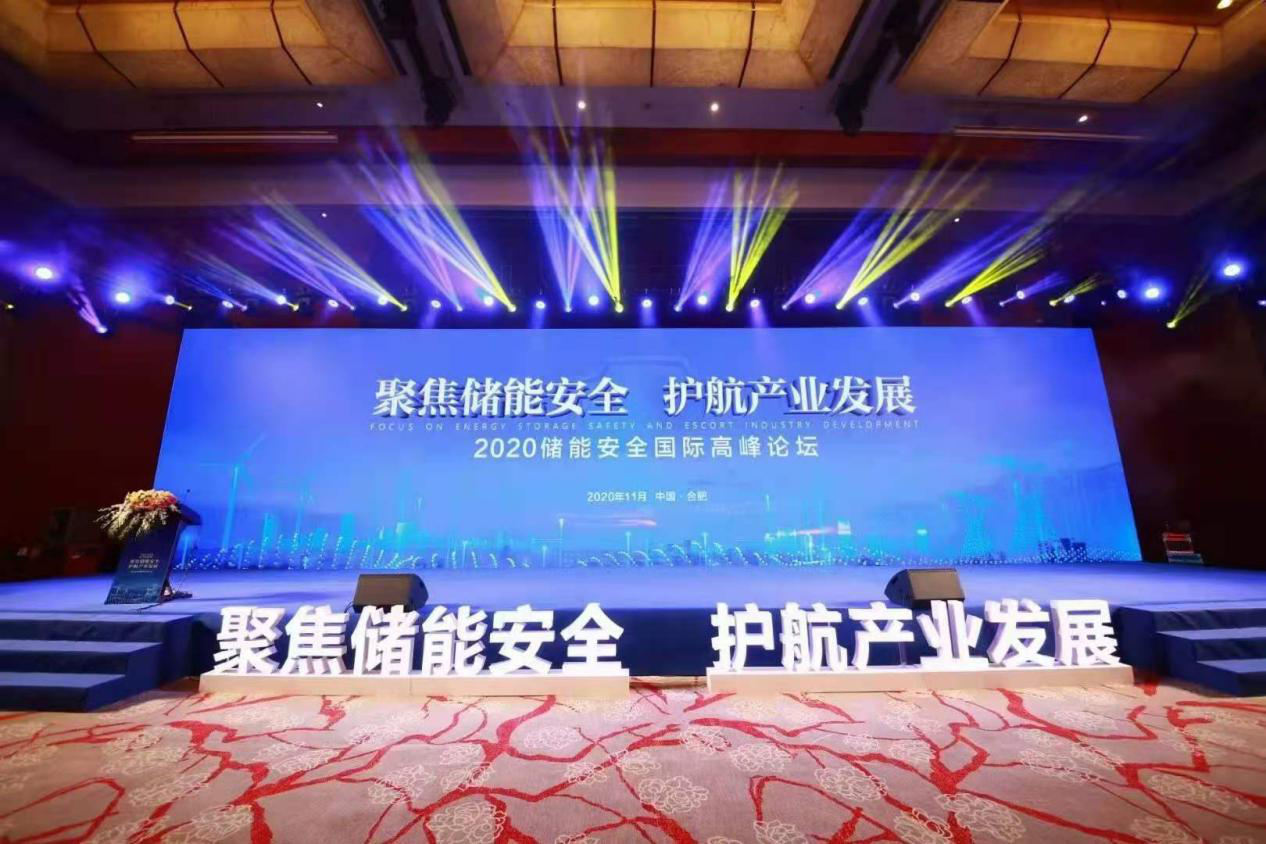
On November 18-20, 2020, the 2020 International Summit on Energy Storage Security was held at the Century Jinyuan Hotel in Hefei. At the meeting, Li Huang from Anhui Zhongke Zhonghuan Defense Equipment Technology Co., Ltd. gave a presentation on "Application of Electrochemical Energy Storage System Fire Prevention and Control Technology". The report mainly includes the following parts: industry background, current situation of energy storage fire protection, solutions, and application cases.
Industry background
In recent years,with the decline in lithium battery prices,the installed capacity has also begun to grow rapidly.In the process of development,there have also been some industry pain points.A typical example is the 29 fire accidents that occurred in South Korea.In response to a 1.5%accident probability,South Korea established an investigation committee.The investigation results showed that defects in the battery system,incomplete battery protection,inadequate operation and management,and inadequate fire-fighting equipment were the main factors causing fires.
When it comes to fire prevention and control,it is necessary to talk about the principle of thermal runaway of lithium-ion batteries.Under abusive conditions such as short circuits,overheating,collisions,etc.,thermal runaway of batteries can occur.Once thermal runaway occurs,various chemical reactions inside the battery occur together,producing a large amount of heat.This heat will violently heat the surrounding batteries,forming thermal runaway propagation,ultimately leading to fire and explosion accidents in the entire energy storage system.
Current situation of energy storage fire protection
At present,there is a lack of fire protection design standards applicable to electrochemical energy storage power plants.Although multiple standards have been issued in China for electrochemical energy storage power plants,there are still shortcomings in the targeted fire protection design specifications.For example,in GB51048-2014"Code for Design of Electrochemical Energy Storage Power Plants",there are no specific fire protection design requirements,and the general industrial building fire protection design is basically followed.At present,there are still many safety issues that need to be addressed in energy storage systems,such as vague battery performance indicators,inadequate system protection and operation management,lack of fire protection technology and standards,and low requirements for emergency response and external rescue measures.
solution
The main deficiency of traditional firefighting in response to energy storage system fire accidents is the insufficient understanding of the fire mechanism and combustion characteristics of lithium-ion batteries.We conducted a large number of thermal runaway tests to collect and detect the gas generated when the battery lost control.Through the study of gas production laws,we further developed relevant monitoring technologies,mainly through multi information coupling detection methods,such as gas,temperature,voltage and other characteristic parameters.Different thresholds were set according to the different dangerous states of the battery,which can be divided into first level,second level,and third level warning modes.
After monitoring and determining that the battery has caught fire,linkage is carried out for fire disposal.Based on extensive fire tests conducted in the laboratory,the fire characteristics and fire propagation rules of the battery after combustion are basically clarified.Then,a thermal runaway model is established to determine the main path of thermal runaway propagation.After understanding the heat runaway propagation rules,the fire system linkage can be used to effectively extinguish open flames within 30 seconds,and corresponding programmable spraying can be developed to achieve a stepped cooling effect and prevent reignition.In addition,our system also has the function of being compatible with secondary fine water mist systems,enabling the same pipeline to be compatible with two fire extinguishing systems,adding multiple safety protections to the energy storage system.
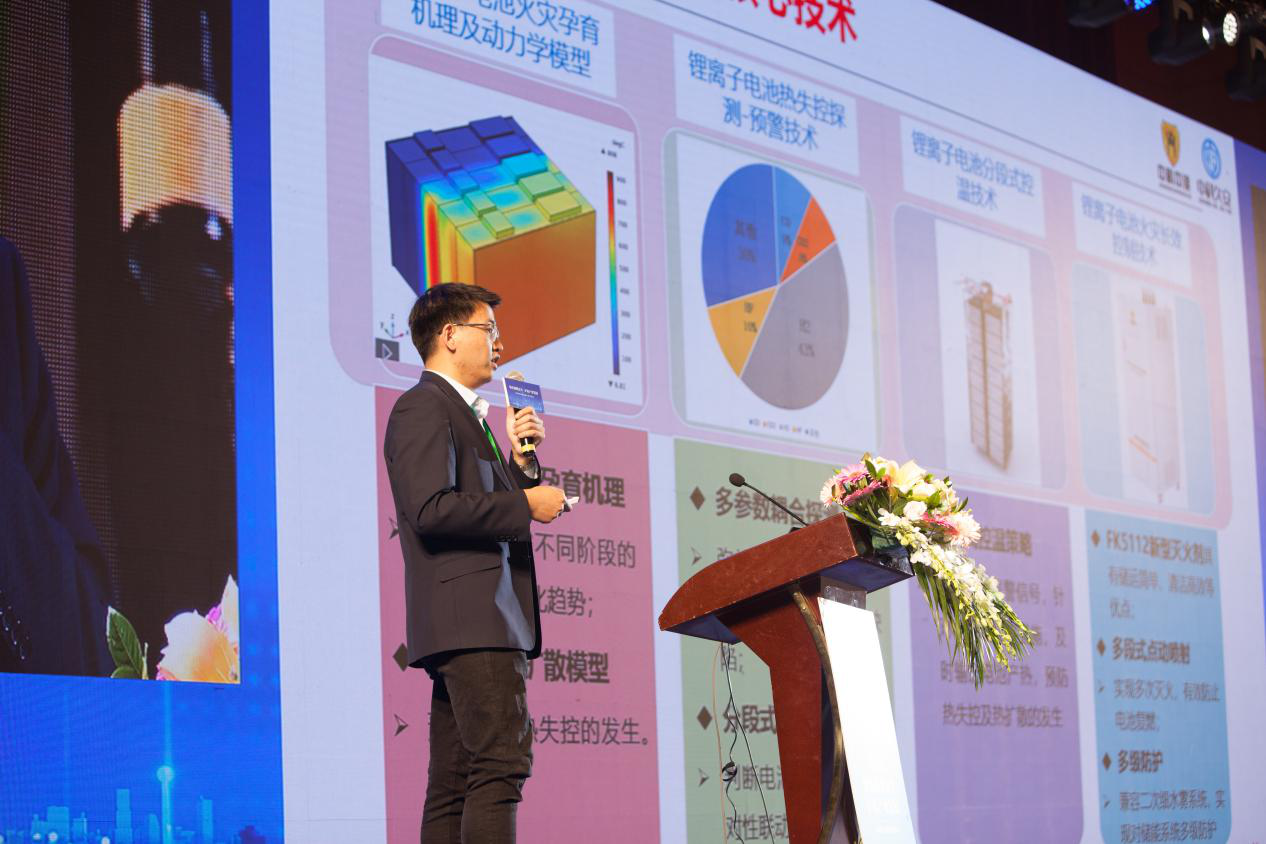
In the process of product development,we have gradually developed some of our own core technologies.Firstly,establish the mechanism and dynamic model of battery thermal runaway incubation,which can predict the occurrence of battery thermal runaway.Based on extensive experimental research,develop thermal runaway detection technology,including multi parameter coupling detection technology,to compensate for the false alarm and missed alarm defects of single detection technology.In terms of fire control,segmented temperature control technology is adopted for lithium-ion batteries based on different alarm signals to achieve a dual effect of cooling and extinguishing,timely conveying battery heat generation,preventing thermal runaway and thermal diffusion.
Application Cases
Anhui Zhongke Jiuan New Energy Company is a high-tech innovative enterprise established by Zhongke Zhonghuan.The company's business mainly focuses on security systems for lithium-ion batteries,radiation new energy vehicles,ships,5G base stations,wind power generation systems,and electrochemical energy storage systems.The technical features of the products mainly include early detection,composite judgment,multi-level warning,and efficient firefighting of lithium-ion battery system fires.
According to different product requirements,we provide customized solutions,including cabin level total flooding,battery cluster level flooding fire extinguishing solutions,and PACK level fire extinguishing systems.
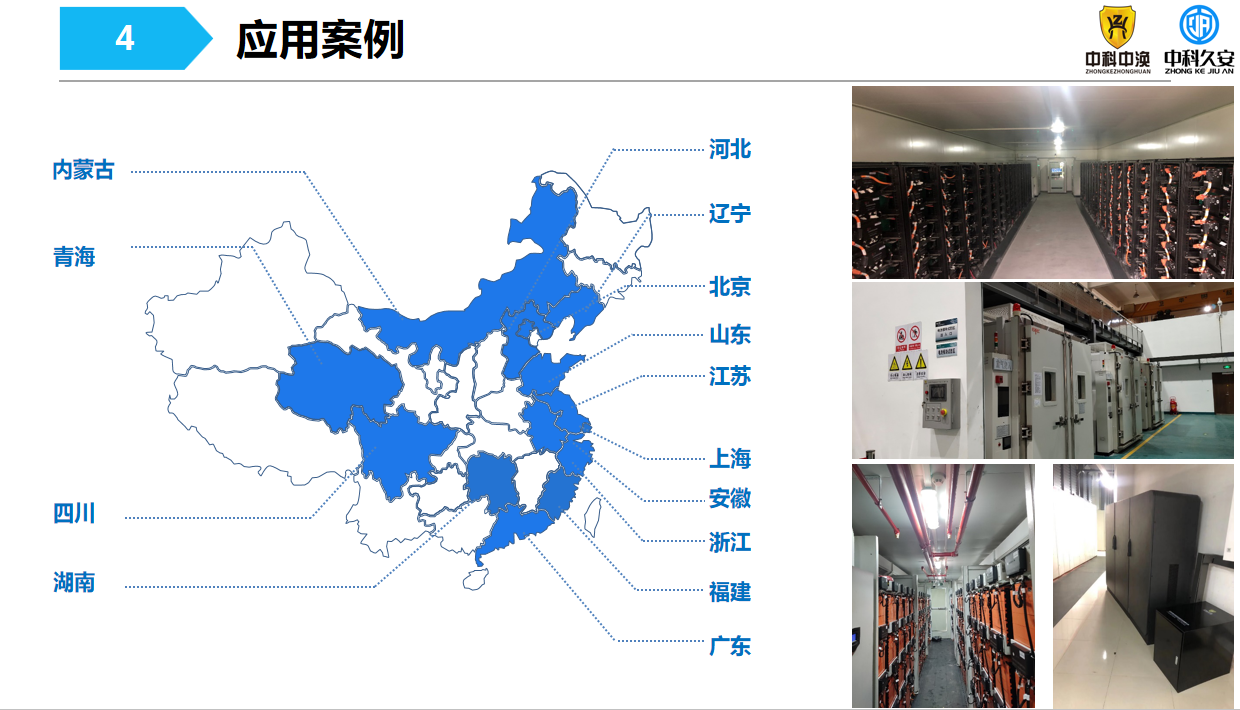
At present, our products are applied in Hebei, Liaoning, Shandong, Sichuan, Hunan and other places. We will continue to track the application situation and hope to explore with colleagues to meet market demand through technological breakthroughs, with the aim of ensuring new energy security, and committed to safeguarding the healthy development of the energy storage industry.
On November 18-20, 2020, the 2020 International Summit on Energy Storage Security was held at the Century Jinyuan Hotel in Hefei. At the meeting, Li Huang from Anhui Zhongke Zhonghuan Defense Equipment Technology Co., Ltd. gave a presentation on "Application of Electrochemical Energy Storage System Fire Prevention and Control Technology". The report mainly includes the following parts: industry background, current situation of energy storage fire protection, solutions, and application cases.
Industry background
In recent years,with the decline in lithium battery prices,the installed capacity has also begun to grow rapidly.In the process of development,there have also been some industry pain points.A typical example is the 29 fire accidents that occurred in South Korea.In response to a 1.5%accident probability,South Korea established an investigation committee.The investigation results showed that defects in the battery system,incomplete battery protection,inadequate operation and management,and inadequate fire-fighting equipment were the main factors causing fires.
When it comes to fire prevention and control,it is necessary to talk about the principle of thermal runaway of lithium-ion batteries.Under abusive conditions such as short circuits,overheating,collisions,etc.,thermal runaway of batteries can occur.Once thermal runaway occurs,various chemical reactions inside the battery occur together,producing a large amount of heat.This heat will violently heat the surrounding batteries,forming thermal runaway propagation,ultimately leading to fire and explosion accidents in the entire energy storage system.
Current situation of energy storage fire protection
At present,there is a lack of fire protection design standards applicable to electrochemical energy storage power plants.Although multiple standards have been issued in China for electrochemical energy storage power plants,there are still shortcomings in the targeted fire protection design specifications.For example,in GB51048-2014"Code for Design of Electrochemical Energy Storage Power Plants",there are no specific fire protection design requirements,and the general industrial building fire protection design is basically followed.At present,there are still many safety issues that need to be addressed in energy storage systems,such as vague battery performance indicators,inadequate system protection and operation management,lack of fire protection technology and standards,and low requirements for emergency response and external rescue measures.
solution
The main deficiency of traditional firefighting in response to energy storage system fire accidents is the insufficient understanding of the fire mechanism and combustion characteristics of lithium-ion batteries.We conducted a large number of thermal runaway tests to collect and detect the gas generated when the battery lost control.Through the study of gas production laws,we further developed relevant monitoring technologies,mainly through multi information coupling detection methods,such as gas,temperature,voltage and other characteristic parameters.Different thresholds were set according to the different dangerous states of the battery,which can be divided into first level,second level,and third level warning modes.
After monitoring and determining that the battery has caught fire,linkage is carried out for fire disposal.Based on extensive fire tests conducted in the laboratory,the fire characteristics and fire propagation rules of the battery after combustion are basically clarified.Then,a thermal runaway model is established to determine the main path of thermal runaway propagation.After understanding the heat runaway propagation rules,the fire system linkage can be used to effectively extinguish open flames within 30 seconds,and corresponding programmable spraying can be developed to achieve a stepped cooling effect and prevent reignition.In addition,our system also has the function of being compatible with secondary fine water mist systems,enabling the same pipeline to be compatible with two fire extinguishing systems,adding multiple safety protections to the energy storage system.
In the process of product development,we have gradually developed some of our own core technologies.Firstly,establish the mechanism and dynamic model of battery thermal runaway incubation,which can predict the occurrence of battery thermal runaway.Based on extensive experimental research,develop thermal runaway detection technology,including multi parameter coupling detection technology,to compensate for the false alarm and missed alarm defects of single detection technology.In terms of fire control,segmented temperature control technology is adopted for lithium-ion batteries based on different alarm signals to achieve a dual effect of cooling and extinguishing,timely conveying battery heat generation,preventing thermal runaway and thermal diffusion.
Application Cases
Anhui Zhongke Jiuan New Energy Company is a high-tech innovative enterprise established by Zhongke Zhonghuan.The company's business mainly focuses on security systems for lithium-ion batteries,radiation new energy vehicles,ships,5G base stations,wind power generation systems,and electrochemical energy storage systems.The technical features of the products mainly include early detection,composite judgment,multi-level warning,and efficient firefighting of lithium-ion battery system fires.
According to different product requirements,we provide customized solutions,including cabin level total flooding,battery cluster level flooding fire extinguishing solutions,and PACK level fire extinguishing systems.
At present, our products are applied in Hebei, Liaoning, Shandong, Sichuan, Hunan and other places. We will continue to track the application situation and hope to explore with colleagues to meet market demand through technological breakthroughs, with the aim of ensuring new energy security, and committed to safeguarding the healthy development of the energy storage industry.


