



Got it! The new version of the "Classification and Grading of Public Bus Types" standard has arrived!
Release Date:2020-06-11 Source: View count:444
1、 The main purpose of the standard
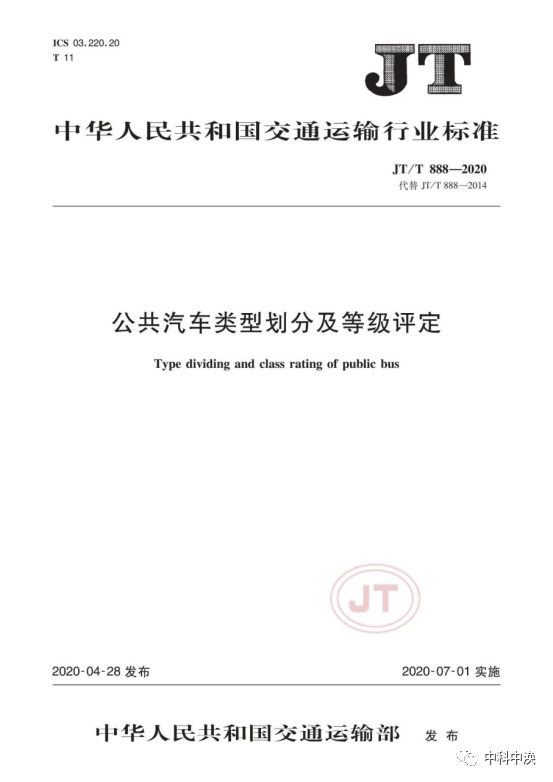
JT/T 888-2020 standard is a national technical standard for the transportation industry and a recommended standard. As the only technical standard for evaluating the technical level of public buses in China, it is the main basis for evaluating the type and level of public buses operating on urban roads. This standard is a recommended standard, but it is mandatory when the transportation authority determines the overall performance and service configuration of buses according to regulations.
The JT/T 888 standard, as an important technical standard in the field of public transportation, puts forward specific requirements for the safety, energy conservation, environmental protection, comfort and other related configurations and performance indicators of various types of buses. For bus companies, products of buses that have not been graded cannot enter the bidding process. The release and implementation of standards will guide domestic bus manufacturers to pursue product technological progress and significantly improve the technical performance of buses in China; For public transportation operators, this standard is an important reference for procurement. When adding or updating public transportation vehicles, public transportation operators should choose the corresponding type and level of buses based on the route and passenger needs.
2、 Main changes in standards
JT/T 888-2020 is the latest revision based on JT/T 888-2014. It is an industry standard proposed and managed by the Bus Technical Committee of the National Automotive Standardization Technical Committee.
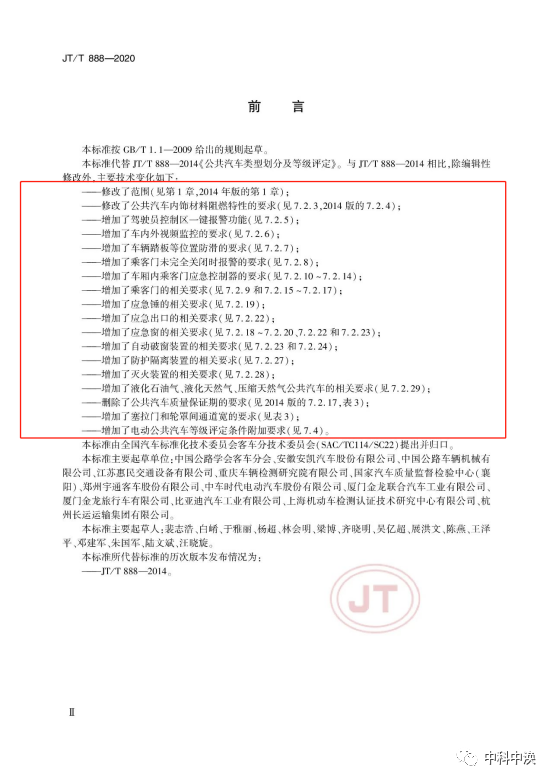
One important background for the proposal of the standard revision plan is JT/T 1240-2019 "Technical Requirements for Safety Facilities for Urban Public Transport Vehicles". To further strengthen the safety guarantee of urban public buses and trams, the Ministry of Transport organized the National Urban Passenger Transport Standardization Technical Committee to formulate JT/T 1240. This standard is a universal industry standard developed by the Ministry of Transport as the industry regulatory authority, considering the guarantee of public transportation vehicle service facilities in the new situation. Based on the attributes of public buses and trams, the standard has put forward multiple detailed requirements for one click alarm, video surveillance system, passenger doors and their emergency controllers, driving area protection and isolation facilities, emergency exits, emergency windows, automatic window breaking devices, battery compartment automatic fire extinguishing devices, battery box fire extinguishing devices, etc. At the same time, the standard was revised in conjunction with newly released or under development standards such as GB 34655 "Requirements for the Configuration of Fire Extinguishing Equipment for Passenger Cars", JT/T 1095 "Flame retardant Characteristics of Interior Materials for Operating Passenger Cars", JT/T 1031 "Plug in Doors for Urban Passenger Cars", GB 38032 "Safety Requirements for Electric Passenger Cars", etc., adding new technical content and particularly highlighting and emphasizing the safety of public buses.
3、 The revision of standards highlights safety
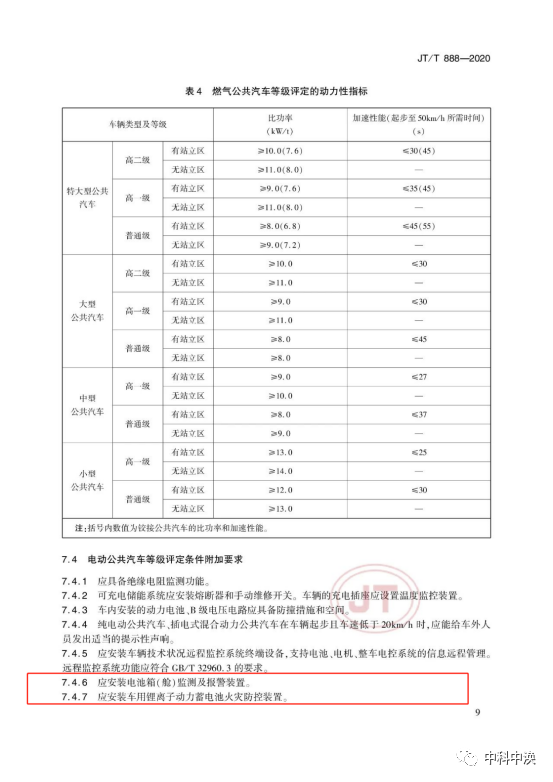
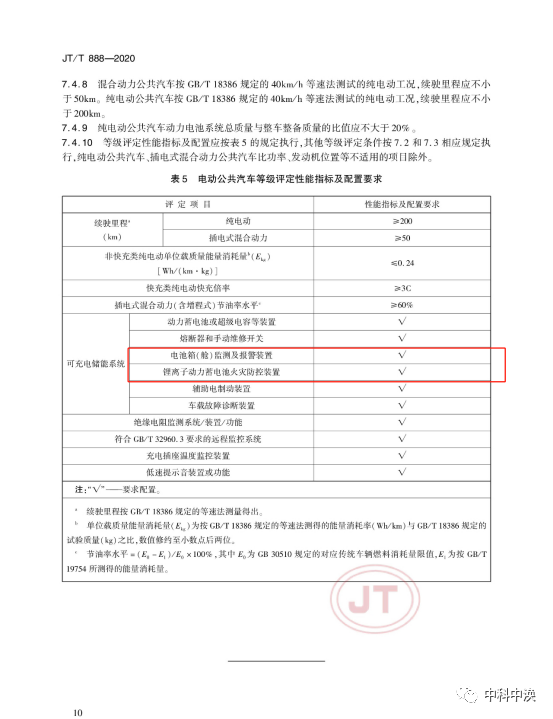
It is not difficult to see that the revision of the new version of the "Classification and Grading of Public Bus Types" standard highlights the safety of public buses, and "adds relevant requirements for fire extinguishing devices" in the main technical aspects, requiring the installation of battery box (cabin) monitoring and alarm devices, vehicle lithium-ion power battery fire prevention and control devices, and focusing on preventing fires caused by battery thermal runaway.
So, how to define battery "thermal runaway"? This needs to be explained from the perspective of the composition and working principle of the power battery module.
From the internal structure of the battery, due to the inherent internal resistance of a single battery, heat is inevitably generated during the charging and discharging process. When the temperature of the battery itself exceeds its normal operating temperature range, the performance and lifespan of the battery will be affected. At the same time, batteries may cause chain reactions such as overcharging, overdischarging, needle puncture, and collision, leading to thermal runaway, smoke, fire, and even explosion.
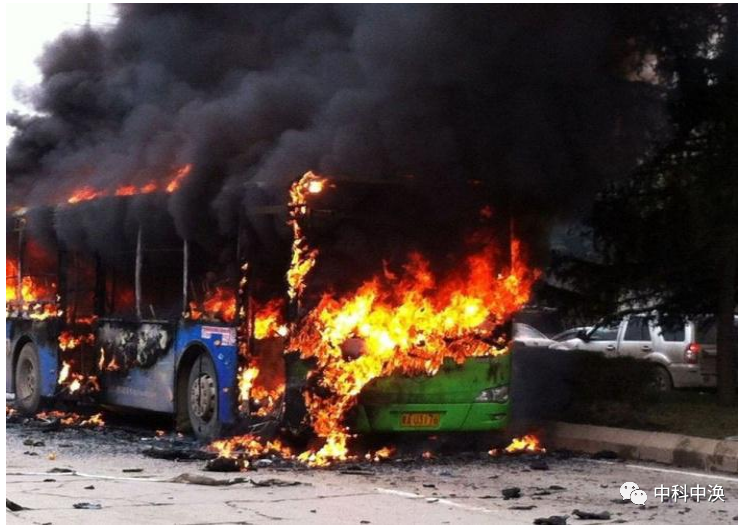
From the perspective of system composition, the power battery system of new energy vehicles consists of battery modules, battery management system BMS, thermal management system, as well as some electrical and mechanical systems. The system also generates a large amount of heat under different operating conditions. In a small battery compartment, if heat cannot be dissipated in a timely manner, it can also affect the battery life in the system, and even cause thermal runaway, leading to battery cell fires and explosions.
Therefore, how to strengthen the safety protection capability of lithium battery boxes for new energy buses has always been a common problem that troubles many public transportation enterprises.
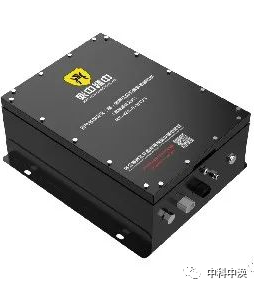
Anhui Zhongke Zhonghuan Defense Equipment Technology Co., Ltd. is committed to the safety protection of the new energy bus industry. Its independently developed lithium-ion power battery box (cabin) fire monitoring and prevention device has obtained multiple national authoritative technical inspection reports such as the Ministry of Public Security's fire product technical appraisal certificate, and has entered the Anhui Province's major first set of catalog and the "Hefei City Two Creation Product Catalog". It has received high attention and concern from the Hefei Municipal Government and is widely used in the new energy city buses of many well-known vehicle enterprises, battery enterprises, and various public transportation enterprises.
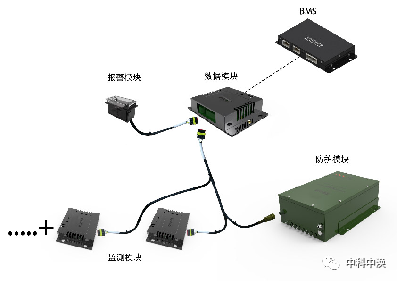
With the release of the new version of the "Classification and Grading of Public Buses" standard, it is believed that the safety situation of the new energy bus industry will be further improved and enhanced. Zhongke Zhonghuan, which has always been committed to "making cities safer" as its corporate vision, will continue to make efforts to improve the safety level of new energy buses and promote the healthy and sustainable development of the industry through innovation.
Zhongke Zhonghuan - Making Cities Safer!
1、 The main purpose of the standard
JT/T 888-2020 standard is a national technical standard for the transportation industry and a recommended standard. As the only technical standard for evaluating the technical level of public buses in China, it is the main basis for evaluating the type and level of public buses operating on urban roads. This standard is a recommended standard, but it is mandatory when the transportation authority determines the overall performance and service configuration of buses according to regulations.
The JT/T 888 standard, as an important technical standard in the field of public transportation, puts forward specific requirements for the safety, energy conservation, environmental protection, comfort and other related configurations and performance indicators of various types of buses. For bus companies, products of buses that have not been graded cannot enter the bidding process. The release and implementation of standards will guide domestic bus manufacturers to pursue product technological progress and significantly improve the technical performance of buses in China; For public transportation operators, this standard is an important reference for procurement. When adding or updating public transportation vehicles, public transportation operators should choose the corresponding type and level of buses based on the route and passenger needs.
2、 Main changes in standards
JT/T 888-2020 is the latest revision based on JT/T 888-2014. It is an industry standard proposed and managed by the Bus Technical Committee of the National Automotive Standardization Technical Committee.
One important background for the proposal of the standard revision plan is JT/T 1240-2019 "Technical Requirements for Safety Facilities for Urban Public Transport Vehicles". To further strengthen the safety guarantee of urban public buses and trams, the Ministry of Transport organized the National Urban Passenger Transport Standardization Technical Committee to formulate JT/T 1240. This standard is a universal industry standard developed by the Ministry of Transport as the industry regulatory authority, considering the guarantee of public transportation vehicle service facilities in the new situation. Based on the attributes of public buses and trams, the standard has put forward multiple detailed requirements for one click alarm, video surveillance system, passenger doors and their emergency controllers, driving area protection and isolation facilities, emergency exits, emergency windows, automatic window breaking devices, battery compartment automatic fire extinguishing devices, battery box fire extinguishing devices, etc. At the same time, the standard was revised in conjunction with newly released or under development standards such as GB 34655 "Requirements for the Configuration of Fire Extinguishing Equipment for Passenger Cars", JT/T 1095 "Flame retardant Characteristics of Interior Materials for Operating Passenger Cars", JT/T 1031 "Plug in Doors for Urban Passenger Cars", GB 38032 "Safety Requirements for Electric Passenger Cars", etc., adding new technical content and particularly highlighting and emphasizing the safety of public buses.
3、 The revision of standards highlights safety
It is not difficult to see that the revision of the new version of the "Classification and Grading of Public Bus Types" standard highlights the safety of public buses, and "adds relevant requirements for fire extinguishing devices" in the main technical aspects, requiring the installation of battery box (cabin) monitoring and alarm devices, vehicle lithium-ion power battery fire prevention and control devices, and focusing on preventing fires caused by battery thermal runaway.
So, how to define battery "thermal runaway"? This needs to be explained from the perspective of the composition and working principle of the power battery module.
From the internal structure of the battery, due to the inherent internal resistance of a single battery, heat is inevitably generated during the charging and discharging process. When the temperature of the battery itself exceeds its normal operating temperature range, the performance and lifespan of the battery will be affected. At the same time, batteries may cause chain reactions such as overcharging, overdischarging, needle puncture, and collision, leading to thermal runaway, smoke, fire, and even explosion.
From the perspective of system composition, the power battery system of new energy vehicles consists of battery modules, battery management system BMS, thermal management system, as well as some electrical and mechanical systems. The system also generates a large amount of heat under different operating conditions. In a small battery compartment, if heat cannot be dissipated in a timely manner, it can also affect the battery life in the system, and even cause thermal runaway, leading to battery cell fires and explosions.
Therefore, how to strengthen the safety protection capability of lithium battery boxes for new energy buses has always been a common problem that troubles many public transportation enterprises.
Anhui Zhongke Zhonghuan Defense Equipment Technology Co., Ltd. is committed to the safety protection of the new energy bus industry. Its independently developed lithium-ion power battery box (cabin) fire monitoring and prevention device has obtained multiple national authoritative technical inspection reports such as the Ministry of Public Security's fire product technical appraisal certificate, and has entered the Anhui Province's major first set of catalog and the "Hefei City Two Creation Product Catalog". It has received high attention and concern from the Hefei Municipal Government and is widely used in the new energy city buses of many well-known vehicle enterprises, battery enterprises, and various public transportation enterprises.
With the release of the new version of the "Classification and Grading of Public Buses" standard, it is believed that the safety situation of the new energy bus industry will be further improved and enhanced. Zhongke Zhonghuan, which has always been committed to "making cities safer" as its corporate vision, will continue to make efforts to improve the safety level of new energy buses and promote the healthy and sustainable development of the industry through innovation.
Zhongke Zhonghuan - Making Cities Safer!


