



Electric vehicles frequently catch fire, sounding the safety alarm for the industry
Release Date:2020-07-30 Source: View count:331
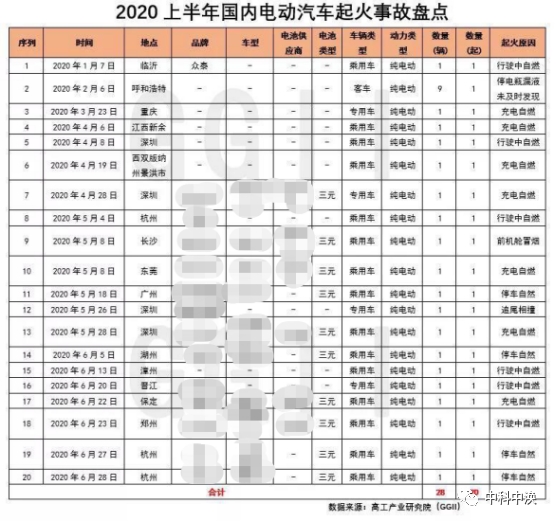
According to incomplete statistics from public reports, the GGII Institute of Advanced Industrial Technology reported that there were a total of 20 electric vehicle fire accidents in China in the first half of 2020, a decrease of 31% compared to the same period last year; The number of vehicles involved is 28, a decrease of 22% compared to the same period last year. Although domestic electric vehicle fire accidents have decreased compared to the same period last year, industry safety issues cannot be ignored.
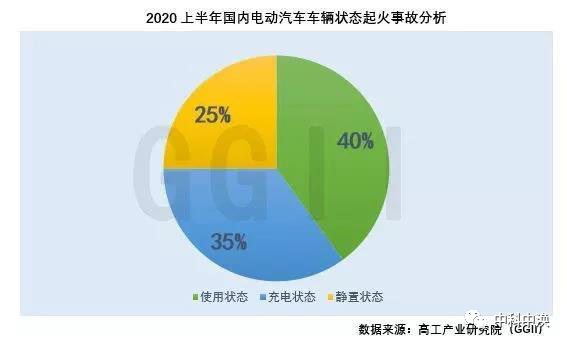
From the perspective of the vehicle states involved in various accidents, there were 8 incidents of fires in use, accounting for 40%, ranking first among electric vehicle fire accidents in the first half of the year; Secondly, there were 7 incidents of fire during charging, accounting for 35%; Finally, in a static state, a total of 5 fire accidents occurred. From the above, it can be seen that fire accidents occur in the charging, use, and stationary of electric vehicles, and safety issues must be given sufficient attention.
Following that, 10 incidents of new energy vehicle spontaneous combustion occurred in mid to early July, including 9 with clear time and location information, namely Qingyuan, Guangdong (July 4), Qingdao, Shandong (July 6), Huizhou, Guangdong (July 8), Xuzhou, Jiangsu (July 11), Shanghai (July 12), Guangzhou, Guangdong (July 13), Yangquan, Shanxi (July 13), Linyi, Shandong (July 17), and Taiyuan, Shanxi (July 17).
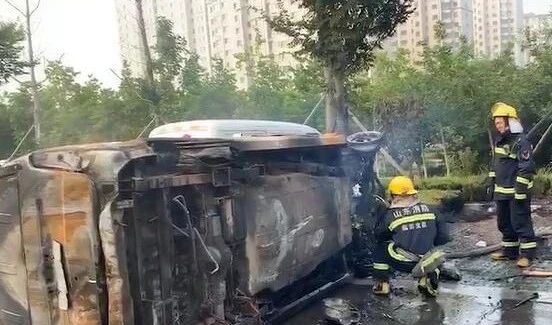
It is understood that the disposal of fires in electric vehicles is slightly different from that in general cars, with the main area of the fire being the bottom battery pack of the car. Due to the large battery capacity, long combustion time, and higher risk of electric vehicles. Conventional car fire extinguishing mainly relies on cooling to control the spread of the fire. If the car battery pack catches fire, even if the open flame is extinguished, the inside of the battery is still in a high temperature state and is prone to reignition. Therefore, it is necessary to closely observe the condition of the battery.
Build a strong security line
In the future, the energy density of lithium-ion batteries will continue to increase according to market demand. In this situation, the technical requirements for safety prevention and control of lithium-ion batteries will become increasingly high. In order to focus on solving the safety problems of lithium-ion batteries and ensure the smooth development of the electric vehicle industry, Zhongke Zhonghuan has independently developed a lithium-ion power battery fire prevention and control product, which can provide an effective solution for this.
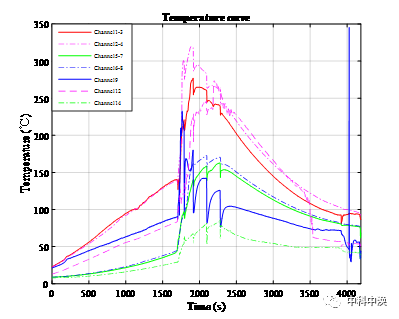
This product utilizes a monitoring module to collect real-time temperature, smoke CO、 Based on electrolyte leakage data and thermal runaway fire dynamic model, determine whether there is thermal runaway of battery cells inside the battery box and issue an alarm signal. Corresponding to the instruction to start the sub box valve of the faulty battery box, open the control valve of the fire extinguishing agent pipeline, implement fire suppression, timely extinguish the fire, reduce the temperature inside the battery box, block thermal diffusion, and ensure the safety of the battery PACK box and the entire vehicle system.
On June 17, 2019, the Equipment Center of the Ministry of Industry and Information Technology issued a notice on conducting safety hazard inspections for new energy vehicles. The notice has put forward many requirements and suggestions for car companies in terms of vehicle safety inspections, enterprise monitoring platforms, reporting of inspection results, and investigation of fire and combustion accidents. The notice specifically named the investigation into the occurrence of spontaneous combustion accidents in new energy vehicles.
This is the third consecutive year since 2018 that the Ministry of Industry and Information Technology has issued similar requirements.
As of the end of June 2020, the number of new energy vehicles in China has reached 4.17 million, which is a hard won achievement. In the future, we need to take steady steps to develop. Only by safeguarding the safety "bottom line" of new energy vehicles can consumers choose them with confidence and promote the development of green travel.
(Partial data source: China Energy Storage Network)
According to incomplete statistics from public reports, the GGII Institute of Advanced Industrial Technology reported that there were a total of 20 electric vehicle fire accidents in China in the first half of 2020, a decrease of 31% compared to the same period last year; The number of vehicles involved is 28, a decrease of 22% compared to the same period last year. Although domestic electric vehicle fire accidents have decreased compared to the same period last year, industry safety issues cannot be ignored.
From the perspective of the vehicle states involved in various accidents, there were 8 incidents of fires in use, accounting for 40%, ranking first among electric vehicle fire accidents in the first half of the year; Secondly, there were 7 incidents of fire during charging, accounting for 35%; Finally, in a static state, a total of 5 fire accidents occurred. From the above, it can be seen that fire accidents occur in the charging, use, and stationary of electric vehicles, and safety issues must be given sufficient attention.
Following that, 10 incidents of new energy vehicle spontaneous combustion occurred in mid to early July, including 9 with clear time and location information, namely Qingyuan, Guangdong (July 4), Qingdao, Shandong (July 6), Huizhou, Guangdong (July 8), Xuzhou, Jiangsu (July 11), Shanghai (July 12), Guangzhou, Guangdong (July 13), Yangquan, Shanxi (July 13), Linyi, Shandong (July 17), and Taiyuan, Shanxi (July 17).
It is understood that the disposal of fires in electric vehicles is slightly different from that in general cars, with the main area of the fire being the bottom battery pack of the car. Due to the large battery capacity, long combustion time, and higher risk of electric vehicles. Conventional car fire extinguishing mainly relies on cooling to control the spread of the fire. If the car battery pack catches fire, even if the open flame is extinguished, the inside of the battery is still in a high temperature state and is prone to reignition. Therefore, it is necessary to closely observe the condition of the battery.
Build a strong security line
In the future, the energy density of lithium-ion batteries will continue to increase according to market demand. In this situation, the technical requirements for safety prevention and control of lithium-ion batteries will become increasingly high. In order to focus on solving the safety problems of lithium-ion batteries and ensure the smooth development of the electric vehicle industry, Zhongke Zhonghuan has independently developed a lithium-ion power battery fire prevention and control product, which can provide an effective solution for this.
This product utilizes a monitoring module to collect real-time temperature, smoke CO、 Based on electrolyte leakage data and thermal runaway fire dynamic model, determine whether there is thermal runaway of battery cells inside the battery box and issue an alarm signal. Corresponding to the instruction to start the sub box valve of the faulty battery box, open the control valve of the fire extinguishing agent pipeline, implement fire suppression, timely extinguish the fire, reduce the temperature inside the battery box, block thermal diffusion, and ensure the safety of the battery PACK box and the entire vehicle system.
On June 17, 2019, the Equipment Center of the Ministry of Industry and Information Technology issued a notice on conducting safety hazard inspections for new energy vehicles. The notice has put forward many requirements and suggestions for car companies in terms of vehicle safety inspections, enterprise monitoring platforms, reporting of inspection results, and investigation of fire and combustion accidents. The notice specifically named the investigation into the occurrence of spontaneous combustion accidents in new energy vehicles.
This is the third consecutive year since 2018 that the Ministry of Industry and Information Technology has issued similar requirements.
As of the end of June 2020, the number of new energy vehicles in China has reached 4.17 million, which is a hard won achievement. In the future, we need to take steady steps to develop. Only by safeguarding the safety "bottom line" of new energy vehicles can consumers choose them with confidence and promote the development of green travel.
(Partial data source: China Energy Storage Network)


